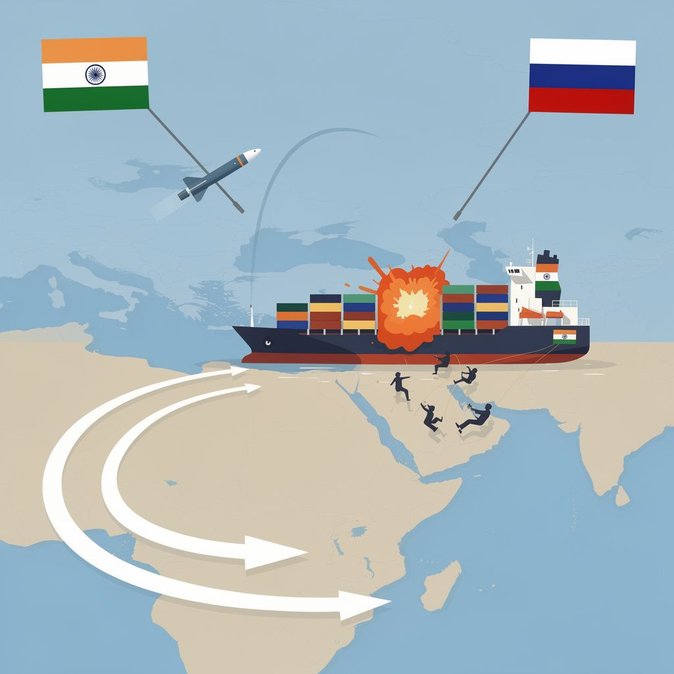
India’s Ministry of External Affairs (MEA) on 21 July called in Russia’s chargé d’affaires, Vladimir Ladanov, to lodge a “strong protest” over the 19 July missile strike that hit the Liberia-flagged MV *Golden Leo* in the Red Sea, killing four Indian crew members and injuring two others. Initial assessments by maritime-security firms suggest the projectile was fired by Houthi rebels, but fragments reportedly show markings from Russian-origin hardware. Impact on global mobility: 1) Indian seafarers—who comprise almost 10 % of the world’s commercial-ship workforce—face renewed risk premiums for Red Sea transits. Manning agencies expect hazard-pay allowances to rise by 30 %. 2) Logistics planners for Indian exporters to Europe will factor in longer Cape of Good Hope routings, adding 10–12 days to delivery schedules and raising freight costs. Government response: The Directorate General of Shipping has issued an interim advisory rerouting Indian-flagged vessels south of 15°N latitude in the Red Sea and mandating enhanced watchkeeping. The Indian Navy’s *INS Kolkata* has been deployed to provide escort in high-risk corridors. Diplomatic stakes: Though the strike was not attributed directly to Moscow, New Delhi’s unusually sharp démarche signals that collateral threats to Indian lives will weigh on the traditionally robust India–Russia relationship. Insurance underwriters in Mumbai say war-risk premiums for cargo through the Bab-el-Mandeb are likely to jump immediately. Advice for employers: Multinationals with Indian crew must update crisis-response protocols, confirm next-of-kin details and ensure psychological-support services are available for affected families.
Source: Akashvani News