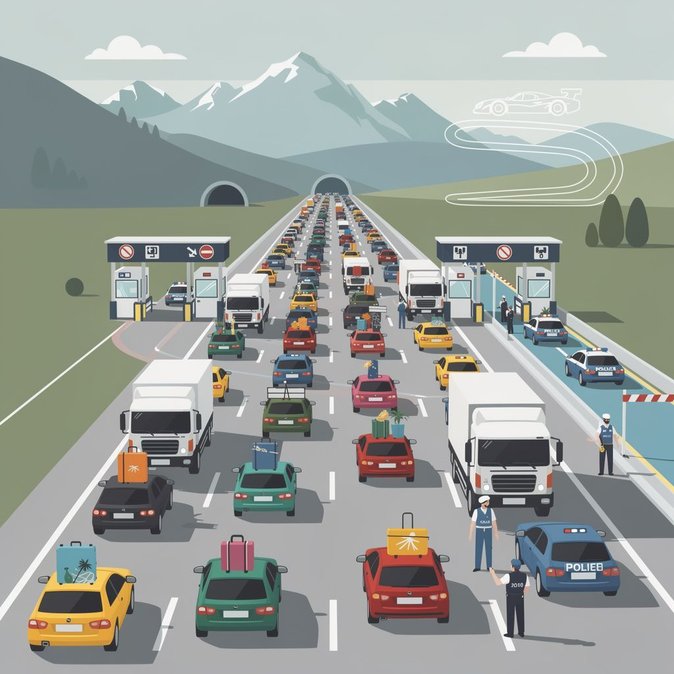
The traditional ‘Ferien-welle’ has arrived. According to Austria’s motoring club ÖAMTC, traffic on the Innkreis (A8) and Pyhrn (A9) motorways—key arteries for holidaymakers heading to Croatia, Italy and Slovenia—peaked this afternoon, 22 July, with tailbacks of up to 15 kilometres at the Suben border crossing to Germany and at the Bosruck tunnel toll plaza. The congestion is being compounded by several large events: the Hungarian Formula 1 Grand Prix, the Bregenz Festival and the Ennstal-Classic rally all fall within the same weekend. For internationally mobile staff driving company cars or rental vehicles, the practical impact is longer door-to-door times and knock-on delays for flights out of Munich or Vienna. Customs officers are also running spot checks for holiday cash and duty-free limits, adding a further five to ten minutes per vehicle. ÖAMTC recommends travelling either very early in the morning or after 20:00, using real-time apps, and booking flexi-tickets on connecting flights or trains. Businesses with cross-border service teams should factor in at least two extra hours on routes towards Slovenia and Northern Italy. The jams coincide with Austria’s ongoing re-introduction of Schengen border controls (see next story), which means that every vehicle is funneled through a reduced number of lanes for potential ID inspections. Logistics companies report average truck delays of 45 minutes— manageable, but enough to break just-in-time delivery chains for perishable goods. HR and Travel Managers are therefore advising staff to carry passports rather than ID cards, keep proof of accommodation handy, and ensure that all third-country employees have their Schengen stay calculations up to date in case of an on-the-spot check. The advice also applies to tourists returning to Austria, particularly non-EU family members who require proof of residence or visa exemption.
Source: ORF Oberösterreich