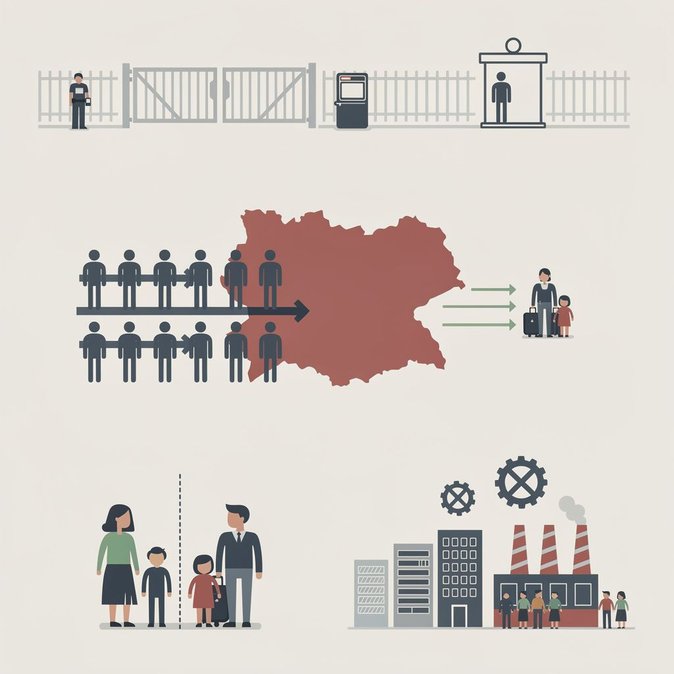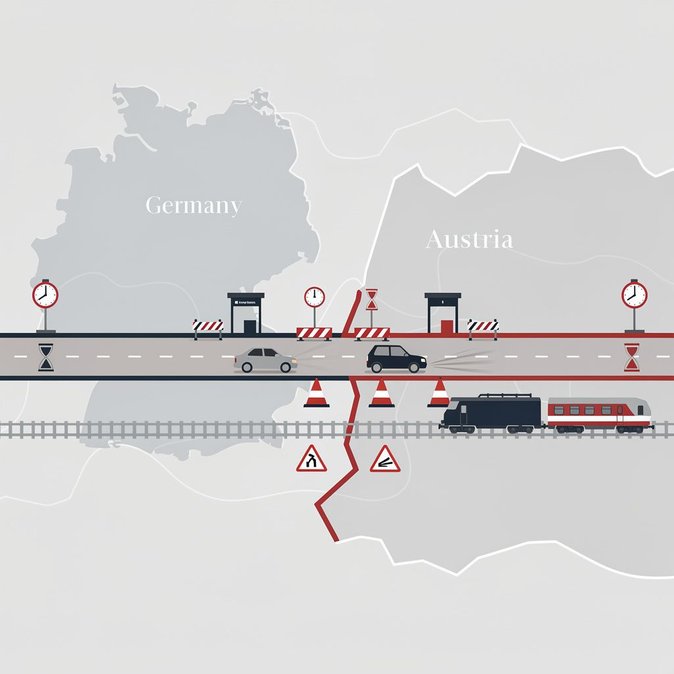
The Austrian Interior Ministry used a press conference on 21 July to unveil its migration and asylum statistics for the first half of 2026. Interior Minister Gerhard Karner (ÖVP) described the figures as a “turning point”, noting that 2,200 people were removed from the country while only 2,016 first-time asylum applications were lodged. Counting family-reunification and repeat cases, the total number of asylum requests fell 44 % year-on-year to 4,903—the steepest decline in the EU alongside Poland. Austrian officials attribute the shift to tougher border-zone checks with Hungary, Slovenia, Czechia and Slovakia, the suspension of most family-reunification visas, and closer police cooperation along the Balkan route. Roughly half of those deported were EU citizens expelled for criminal or public-order reasons, but Karner stressed that convicted non-EU criminals and failed asylum seekers remain the top priority for removals. The Interior Ministry pointed to falling occupancy in federal reception centres—now around 5,500 residents—as evidence that provincial welfare systems and schools are under less strain. According to ministry officials, the cost of basic support has dropped by more than €125 million since 2023. The controversial freeze on family-reunification visas, introduced last year by emergency decree, reduced arrivals under that channel from 6,000 in H1 2024 to just 50 in the same period this year. Although the decree has lapsed, Karner said a quota system for family migration is being drafted within the framework of Austria’s forthcoming implementation of the EU Asylum and Migration Pact. Legal experts warn that any rigid ceiling could violate EU free-movement and human-rights law, but government sources insist “a very low initial quota” is politically unavoidable. Looking ahead, Vienna is coordinating with Germany, the Netherlands, Denmark and Greece to identify a “partner country outside the EU” that could host asylum-processing or return centres as early as 2027. Such offshore processing—modelled on deals pursued by Italy and the UK—is seen by the Austrian government as the only sustainable way to deter irregular entries. Critics argue that externalising asylum risks breaching the Refugee Convention and merely shifts humanitarian responsibilities. For businesses that rely on global mobility, the headline decline in humanitarian immigration may ease political pressure to tighten labour-migration channels such as the Rot-Weiß-Rot Card. However, companies should brace for continued document checks at Austria’s intra-Schengen borders and longer lead times for dependent-visa applications until the new quota regime is clarified—likely not before the first quarter of 2027.
Source: ORF.at