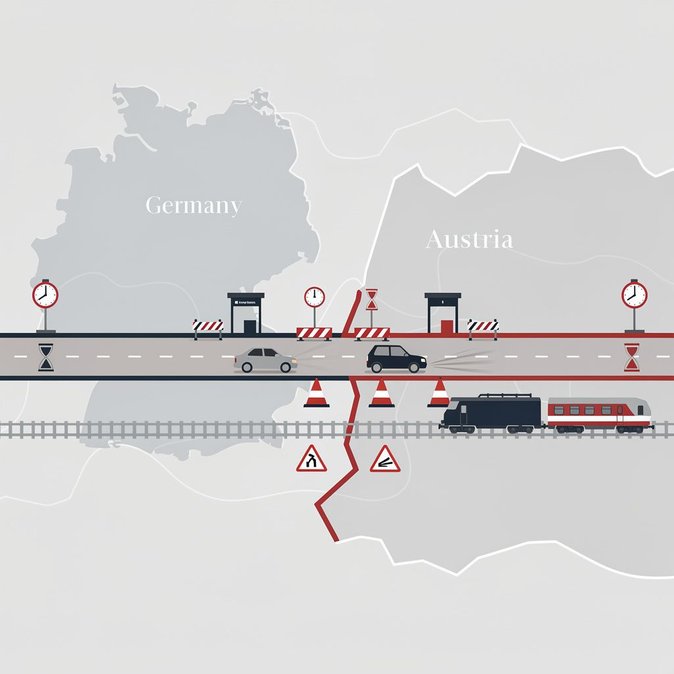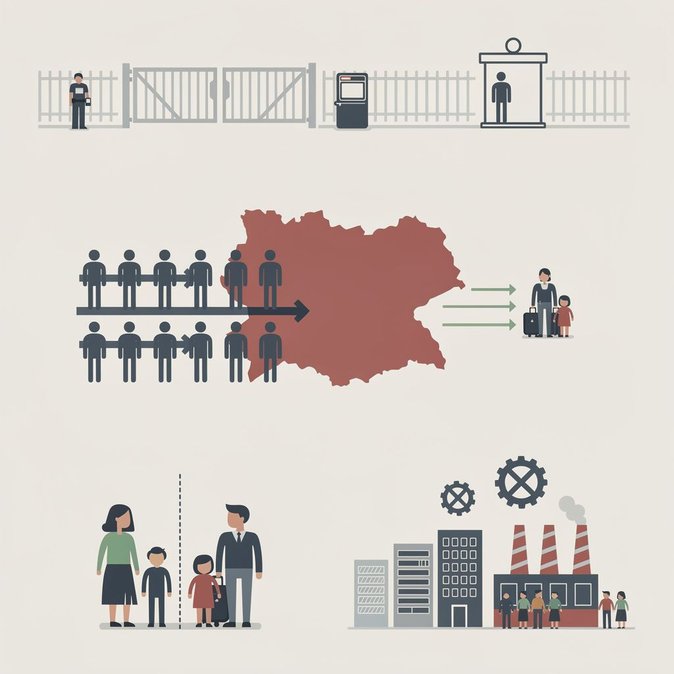
Austria’s Federal Ministry of the Interior believes it has reached a turning-point in the country’s migration dynamic. In a press conference held in Vienna on 21 July 2026, Interior Minister Gerhard Karner (ÖVP) presented the official asylum and return statistics for the first six months of the year. According to the figures, only 2,016 **first-time** asylum applications were lodged between January and June—44 % fewer than in the same period of 2025. Over the same span, 2,200 people were removed from Austrian territory under return or expulsion orders. Half of those returned were EU citizens who had lost their right of residence; the remainder were third-country nationals whose protection status had been withdrawn or whose applications had been rejected. Karner attributed the sharp decline primarily to a “triple lock” of measures: 1) a fortified EU external border, 2) the continuation of bilateral “Schengen-border-area controls” on Austria’s frontiers with Hungary and Slovenia, and 3) a politically controversial freeze on family-reunification visas introduced by ministerial decree last year. That decree expired in June, but the government now plans to replace it with a statutory quota in the forthcoming amendment to the Settlement and Residence Act. Officials said the initial quota would be set "very low" until the EU’s new Pact on Migration and Asylum is fully operational. From a corporate-mobility perspective, the numbers matter because they signal that Austria’s labour market is unlikely to receive meaningful inflows of non-EU talent through humanitarian channels in the near term. Employers that rely on family-reunification rights to attract or retain key workers—particularly Syrian, Afghan and Iranian nationals, who still account for half of all new claims—will face additional planning uncertainty. At the same time, reduced pressure on provincial reception centres could free up accommodation capacity that provinces sometimes repurpose for seasonal or posted workers. The minister also confirmed that Vienna is working with Germany, the Netherlands, Denmark and Greece on an EU pilot for processing asylum claims—and possibly return procedures—in third countries outside Europe. A decision on the partner state is expected by the end of 2026, with operations slated for 2027. Although details remain sketchy, business-immigration advisers note that any shift of first-line processing offshore could lengthen timelines for protection-related residence permits but might, in the long run, shorten regular visa queues at Austrian missions abroad. Criticism was swift. Opposition migration spokespersons labelled the presentation “statistical window dressing”, pointing out that the government counts voluntary departures and Dublin transfers in the same column as forced removals. NGOs warned that the freeze on family reunification raises human-rights concerns and may ultimately be struck down by the Constitutional Court. For now, however, the half-year data reinforce Austria’s trajectory toward stricter entry and residence controls—an environment that multinationals operating in the country will need to monitor closely.
Source: ORF.at