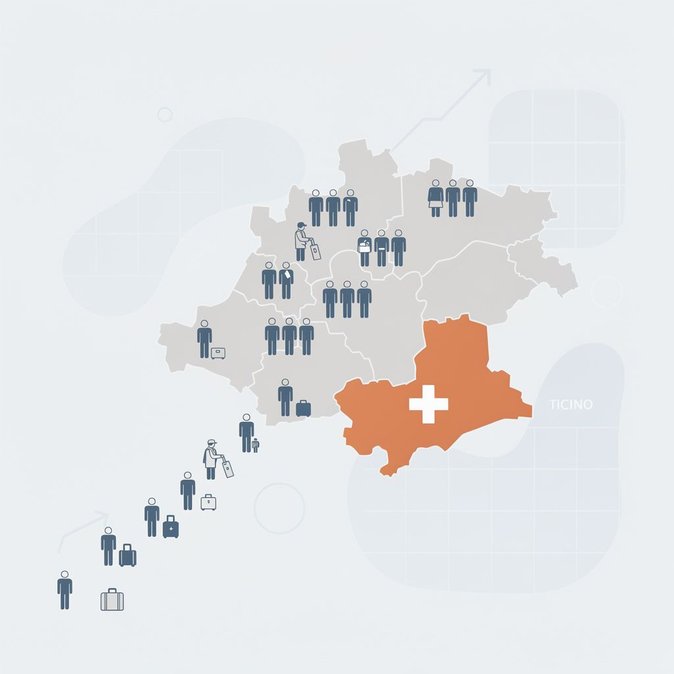
Switzerland’s long-negotiated agreement with Italy on remote work for cross-border employees has finally cleared its last political hurdle. At a cabinet meeting in Rome on 22 July 2026, the Italian Council of Ministers approved the bill that ratifies the amending protocol to the 23 December 2020 frontier-worker tax accord. Once the Italian parliament gives procedural assent (a formality now that the government has backed the text), both countries can exchange instruments of ratification, bringing the new rules into force at the start of the next calendar quarter. Under the protocol, frontier workers who hold a Swiss G-permit but reside in Italy may perform up to 25 % of their annual working time from their home in Italy without losing their frontier-worker status or triggering a shift in taxing rights. Until now, Swiss employers and their Italian staff had to rely on a patch-work of temporary COVID-era understandings that left considerable uncertainty about social-security affiliation, wage-tax withholding and corporate-presence risk. The 25 % ceiling mirrors the threshold contained in the EU’s multilateral framework agreement on social security for telework and is high enough to allow one remote day a week on a standard five-day schedule. Employers will, however, have to keep accurate time records and issue written addenda to employment contracts. Exceeding the quota could expose the worker to Italian income-tax assessment and oblige the Swiss company to register a permanent establishment south of the border. For global-mobility managers the ratification removes a significant compliance headache. Companies with production or R&D sites in Ticino and Lombardy can now offer flexible-work arrangements as part of their talent packages without triggering double taxation or social-security surprises. Payroll teams should update their systems to monitor telework days automatically and ensure that wage slips continue to show Swiss-only withholding. The Swiss government is expected to publish administrative guidance in August, while Italy’s Revenue Agency will issue implementing circulars on documentation requirements. Multinationals are advised to review existing cross-border telework policies and communicate clearly to employees that the 25 % limit applies on a rolling 12-month basis, not simply by calendar year.
Source: frontaliereticino.ch