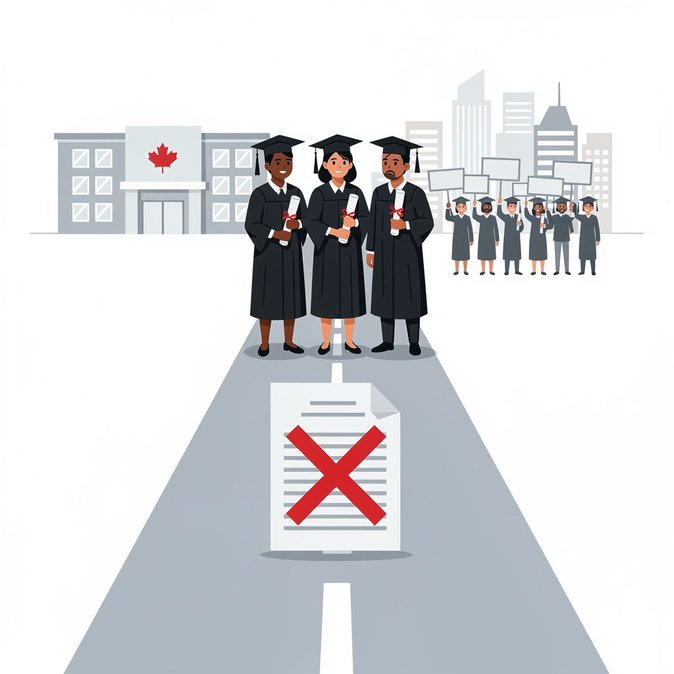
Portage College in Alberta has told hundreds of Indian alumni to seek legal counsel after Immigration, Refugees and Citizenship Canada (IRCC) rejected their Post-Graduation Work Permit (PGWP) applications, triggering campus protests that spilled over into Edmonton streets this week. In a statement updated on 22 July, the college acknowledged that graduates from certain non-credit diploma streams had received refusal letters despite holding institutional support letters. IRCC officers ruled that the programmes in question did not meet Regulation 205 (c)(ii) work-authorisation criteria. Students say those streams were listed as PGWP-eligible when they enrolled and cost over CAD 30,000 in fees. Affected graduates have been told to leave Canada or transition to another status, but many are petitioning Ottawa for a one-time remedy similar to the pandemic-era policy that restored eligibility for out-of-status students. Portage officials stressed that the college “does not make immigration decisions” and urged students to consult licensed immigration lawyers or Regulated Canadian Immigration Consultants. The Indian High Commission in Ottawa has requested IRCC to clarify the rule change and timelines for reconsideration. Meanwhile, recruitment agents in Punjab and Gujarat report a spike in refund demands and deferrals for the January 2027 intake. For Indian corporates sending employees to Canadian upskilling programmes, the episode is a cautionary tale: always verify a programme’s Designated Learning Institution (DLI) status and PGWP eligibility just before enrolment, not merely at offer-letter stage. Employers with Canada-bound assignees should also monitor upcoming IRCC ministerial instructions, as Ottawa is under pressure to publish a transition policy before the fall semester. Labour-market impact: If PGWP rejections widen, Canadian SMEs in hospitality and retail—sectors that lean heavily on post-study permit holders—could face staffing gaps over the 2026 holiday season.
Source: Outlook India