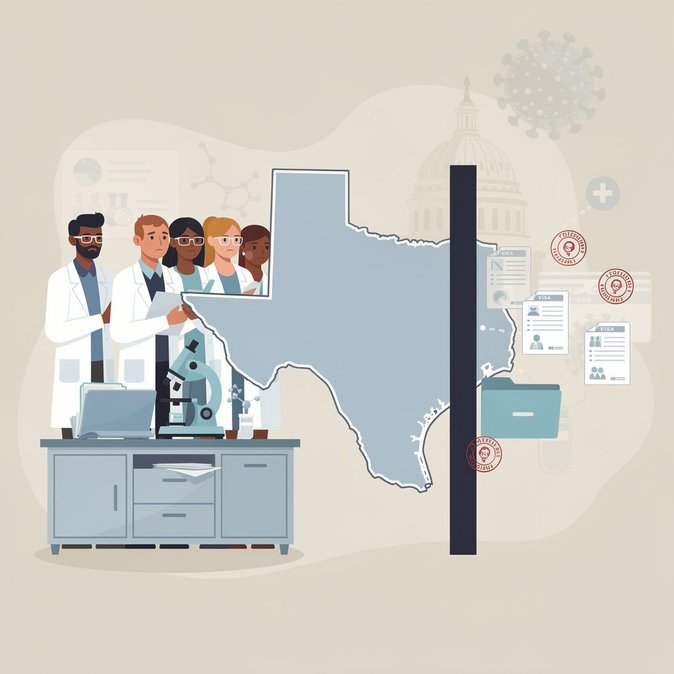
The Texas Tribune reported on July 22 that Governor Greg Abbott’s executive directive requiring public institutions to obtain state approval before filing new H-1B petitions is sowing anxiety at the world-renowned MD Anderson Cancer Center and 43 other Texas universities and health systems. Records show MD Anderson currently sponsors 277 H-1B researchers; statewide, public entities reported 3,332 H-1B workers to the Texas Workforce Commission (TWC). Under the directive, effective January 27, institutions must justify why no Texan can fill a role and seek TWC permission—an approval the agency says it has not yet granted in any case. The policy also blocks petitions for candidates from “prohibited countries,” including China, which supplies a significant share of biomedical Ph.D. talent. Cancer advocates warn that hiring freezes or delays could stall clinical trials and jeopardize Texas’s US $6 billion investment in state-funded oncology research. Immigration attorneys add that uncertainty may deter top post-docs from accepting fellowships, pushing them to institutions in California or Massachusetts with more predictable sponsorship pathways. For corporate R&D leaders, the episode is a cautionary tale of how state-level visa barriers can ripple through national innovation ecosystems. Companies collaborating with Texas medical centers should monitor project timelines and consider remote or out-of-state lab sites if talent access erodes.
Source: The Texas Tribune