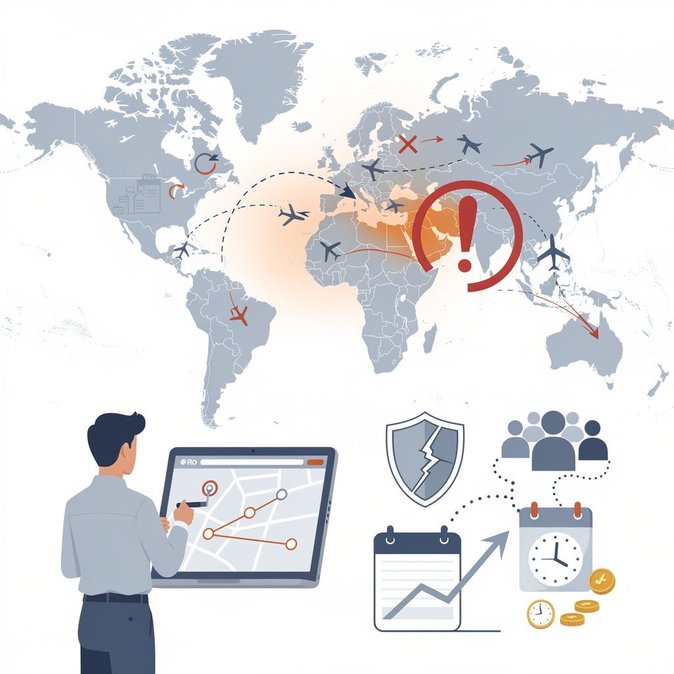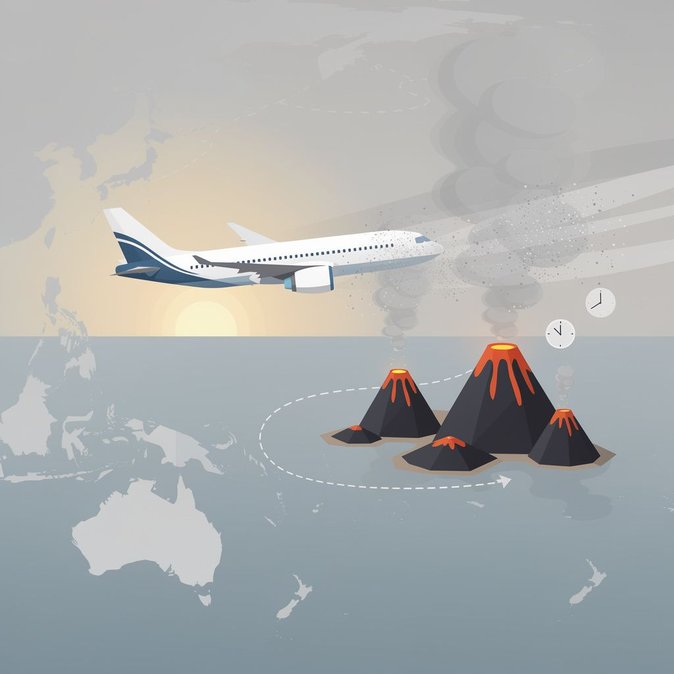
Australia’s Bureau of Meteorology Volcanic Ash Advisory Centre (VAAC) in Darwin issued a string of fresh advisories on 25 July 2026 for multiple eruptions in Indonesia and Papua New Guinea, including Semeru, Krakatau, Langila and Dukono. Plumes were observed up to flight level 140 (≈4,300 m) and forecast to drift north-east and south-west over busy air corridors linking Australia with Bali, Jakarta, Manila and Port Moresby. While no Australian airspace is yet contaminated, Jetstar and Virgin Australia have begun pre-emptive flight-path adjustments for services to Denpasar and Makassar. Regional Express has warned that turboprop sectors between Darwin and Gove could see minor schedule changes if ash drifts further south. Historical events show ash particles can erode jet-engine turbine blades, clog air-conditioning packs and reduce cockpit visibility, prompting conservative diversion policies. Darwin International Airport has activated its volcanic-ash contingency plan, alerting ground handlers to be ready for unscheduled diversions. Freight forwarders moving time-critical seafood exports from the Top End to Asian hubs are being told to build 24–48 hours of flexibility into shipping windows. Travel-insurance providers note that most standard policies treat volcanic ash as a weather event; travellers without optional cover for natural-disaster delays could face out-of-pocket costs. The timing is awkward for corporate mobility planners, coming at the height of Australia’s winter outbound peak and just weeks before the ASEAN Business Leaders Summit in Jakarta. Companies with senior executives booked on direct flights through Indonesian airspace are re-routing via Singapore and Kuala Lumpur or considering virtual participation. Airlines will continue to update NOTAMs and meteorological briefings every six hours until the ash columns collapse or disperse. Experts caution that ash clouds can change altitude and direction rapidly with shifting winds. Travellers should monitor airline apps, subscribe to BOM aviation bulletins and allow extra lay-over time if connecting onward to Europe or North America via South-East Asia.