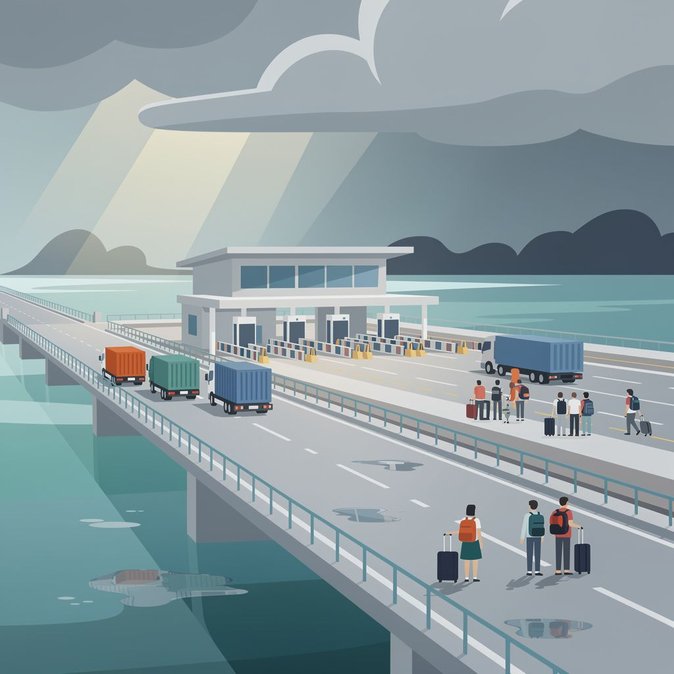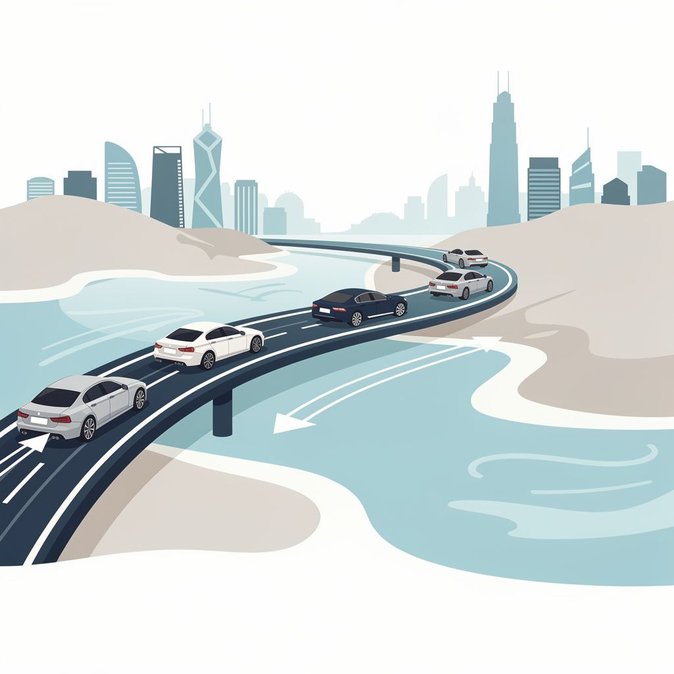
China’s much-watched ‘粤车南下’ (Yue Che Nan Xia, or “Guangdong Cars Heading South”) initiative took a major leap on 25 July when private-vehicle owners from Shenzhen, Foshan, Dongguan, Huizhou and Zhaoqing were allowed to enter Hong Kong via the Hong Kong–Zhuhai–Macau Bridge. The expansion doubles the daily quota for cars entering Hong Kong’s urban area to 200 and follows a successful pilot launched last December for Guangzhou, Zhuhai, Jiangmen and Zhongshan. Under the scheme, eligible mainland motorists apply online for a Hong Kong Closed-Road Permit and purchase cross-border insurance before selecting a travel slot. Officials at the bridge’s Zhuhai Highway Port have carved out dedicated inspection lanes; the average processing time is now under one minute per car, according to the Zhuhai Border Inspection Station. For businesses, the policy simplifies executive mobility. Guangdong-based senior managers can now drive themselves to Hong Kong headquarters for same-day meetings, reducing reliance on chauffeured cross-border limousines that cost up to 1,500 RMB per round trip. Retailers also expect an uptick in high-spending mainland shoppers during the summer holidays. The move aligns with Beijing’s strategy to knit the Greater Bay Area into a 90-minute “one-hour living圈,” where people, capital and goods move freely among its 11 member cities. Analysts predict vehicle quotas could rise to 500 per day by year-end if traffic-flow data shows manageable congestion. Companies should remind employees that Hong Kong’s right-hand-drive rules and strict drink-driving limits apply. Organising short driver-orientation sessions or providing bilingual road-sign guides can enhance safety and compliance.
Source: China News Service