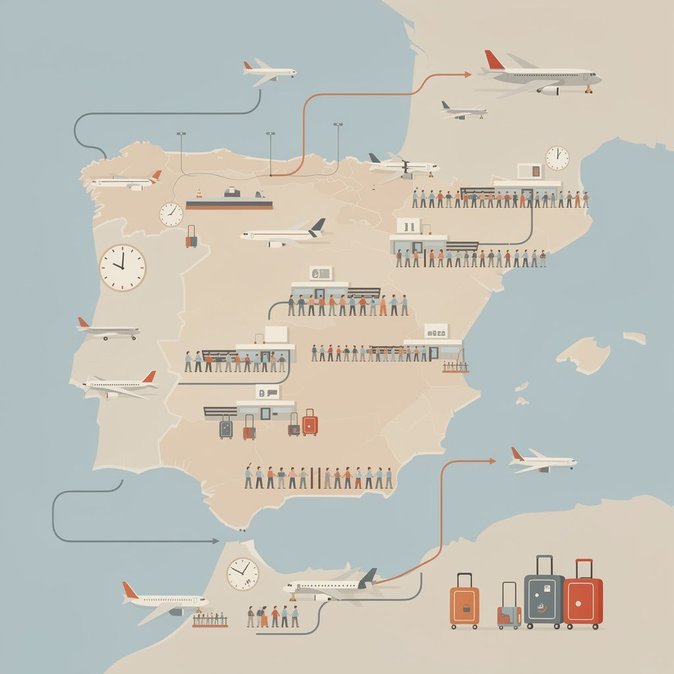
Spain’s international gateways are facing their first high-season stress-test under the European Union’s new Entry/Exit System (EES), which has been fully operational at all Schengen external borders since 10 April 2026. The European Commission confirmed on 27 July that more than 145 million border crossings have already been processed through the biometric system. Although the technology is shared across 29 Schengen countries, its impact is particularly acute in Spain, Europe’s second-busiest tourist destination and the continental hub for much Latin-American traffic. EES replaces the old passport-stamping regime for non-EU nationals staying fewer than 90 days in any 180-day period. At Spanish airports such as Madrid-Barajas and Barcelona-El Prat, travellers now have to pause at self-service kiosks or staffed booths where facial images and four fingerprints are captured and cross-checked against EU security databases. Border police report that the average processing time for a first-time enrolment is under two minutes, but queues have occasionally topped 40 minutes at peak arrival banks. Officials say wait times should shorten once returning visitors can use the automated lanes; their data are already stored, so only a facial scan is needed. The Commission reminds travellers that certain categories are exempt from EES: EU citizens, long-stay visa or Spanish residence-permit holders, and family members of EU citizens with residence cards. However, Britons, Americans and other visa-exempt visitors must comply—sparking renewed calls from Spain’s tourism sector for extra staffing until travellers become familiar with the system. Airlines have been told that from late August they will be fined if they fail to pre-notify passenger data accurately, because mismatches slow enrolment at the border. For corporate mobility managers, the advice is to add at least 30 minutes to airport itineraries during the summer crush and to brief assignees entering Spain on the need for clean fingerprints (no bandages or moisturiser) and unobstructed facial recognition (no tinted glasses or large hats). Companies with rotating short-term assignees should also log EES “entry” and “exit” dates centrally, as the system automatically calculates cumulative Schengen stay and will trigger an over-stay alert that results in fines or future entry bans. Looking ahead, Spain’s Interior Ministry plans public information campaigns at cruise ports and the land borders with Gibraltar and Morocco ahead of the September return rush. Meanwhile, the separate ETIAS travel-authorisation scheme for visa-exempt nationals has been pushed back to late 2026, giving Spanish stakeholders breathing space to consolidate EES before the next technology rollout.