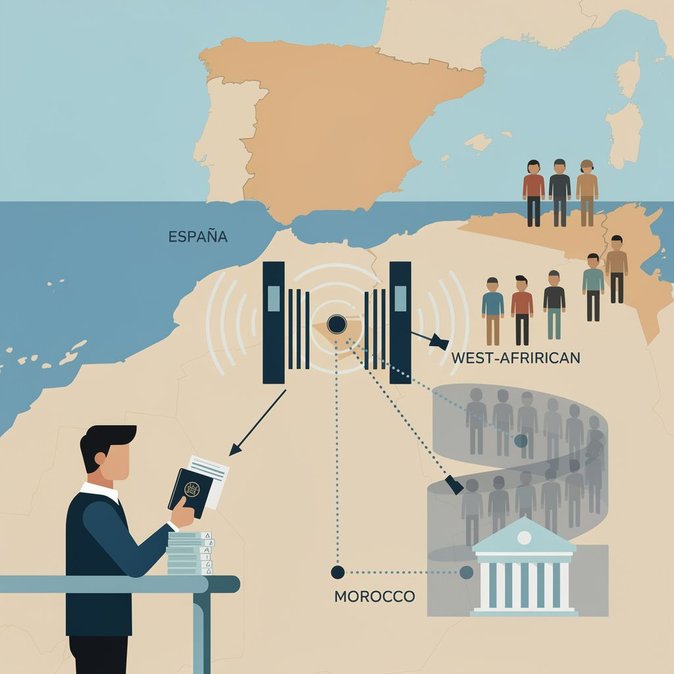
Irregular sea and land arrivals to Spain have fallen sharply thanks in part to stepped-up operational coordination with Morocco, according to the Spanish Commission for Refugee Aid (CEAR). In its annual report, highlighted by Hespress on 27 July, CEAR notes a 35 % reduction in irregular entries and a corresponding 13.7 % decline in asylum applications during 2025. The NGO attributes the trend to joint patrols, intelligence sharing and funding agreements with Morocco, Mauritania and Senegal that extend Europe’s border controls far beyond its physical frontiers. While Spanish officials tout the numbers as evidence that ‘externalisation’ works, CEAR cautions that global protection needs remain high and that deterrence policies may simply push migrants onto more dangerous routes. For global-mobility practitioners the data signal tougher enforcement along the western Mediterranean and Atlantic corridors. Companies relocating staff from West Africa to Spain should expect heightened document checks, longer wait times at Tarifa, Algeciras and Canary Islands entry points, and possible delays in family-reunification petitions. Legal advisers also warn that lower asylum-case volumes do not necessarily translate into faster processing: Madrid’s asylum office still faces a backlog exceeding 85,000 files, meaning humanitarian transfers for employees or dependants may be subject to lengthy waits. Employers are urged to budget for legal support and to explore alternative residence pathways such as highly-skilled or intra-company transfer permits. Diplomatically, the figures give fresh momentum to the post-2022 thaw in Madrid–Rabat relations and may influence forthcoming negotiations on EU readmission agreements—developments that mobility managers should track closely.
Source: Hespress English