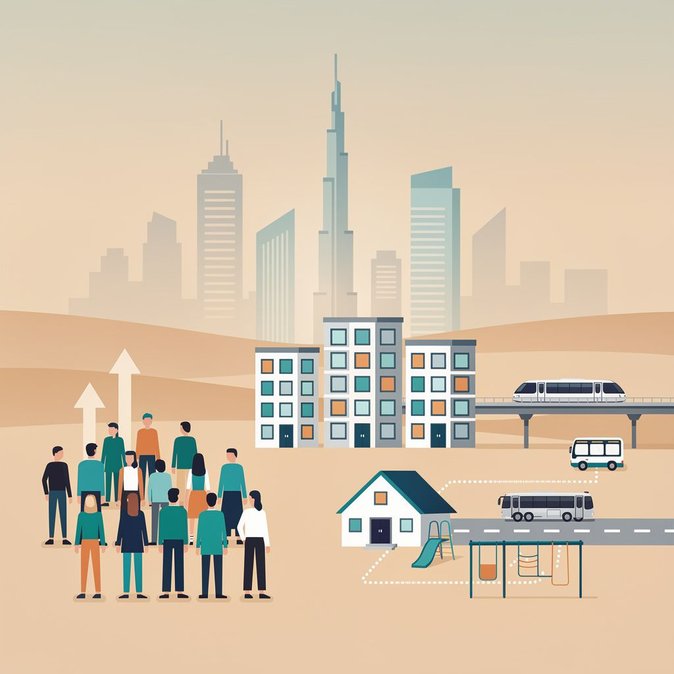
Live data from Dubai’s Population Clock shows the emirate’s resident head-count hit 4.741 million at 13:45 on July 30—an increase of 161,335 since January 1. The figures, released under the ‘Dubai Population Now’ real-time census endorsed by Crown Prince Sheikh Hamdan, rebut social-media claims that expatriates are fleeing because of regional instability. More than one million residency permits and 66,000 Golden Visas were issued in the first half of 2026, according to the General Directorate of Residency and Foreigners Affairs (GDRFA). Daytime population, swollen by commuters and tourists, now peaks at 6.39 million—40 per cent above the night-time baseline—placing heavy demand on transport, health care and schooling. For global-mobility professionals the message is twofold. First, Dubai remains a magnet for talent even amid geopolitical shocks; companies delaying relocations over war-risk fears may find housing and school slots tightening once they resume. Second, the surge underscores why the government keeps widening visa pathways—from Green Visas for skilled workers to the Creative Golden Visa—so that employers can onboard staff quickly without quota bottlenecks. Urban planners say the near-record 7.5 per cent growth logged in 2025 is on track to be matched again this year. That will accelerate infrastructure projects such as the Dubai Metro Blue Line and additional immigration-eGate lanes at DXB. Mobility teams should monitor these developments when forecasting allowances for commuting time and family services. Despite the positive numbers, officials caution that sustainable growth requires balanced demographics; almost 15 per cent of residents are aged 30-34, highlighting ongoing demand for mid-career professional opportunities and affordable housing.
Source: Khaleej Times