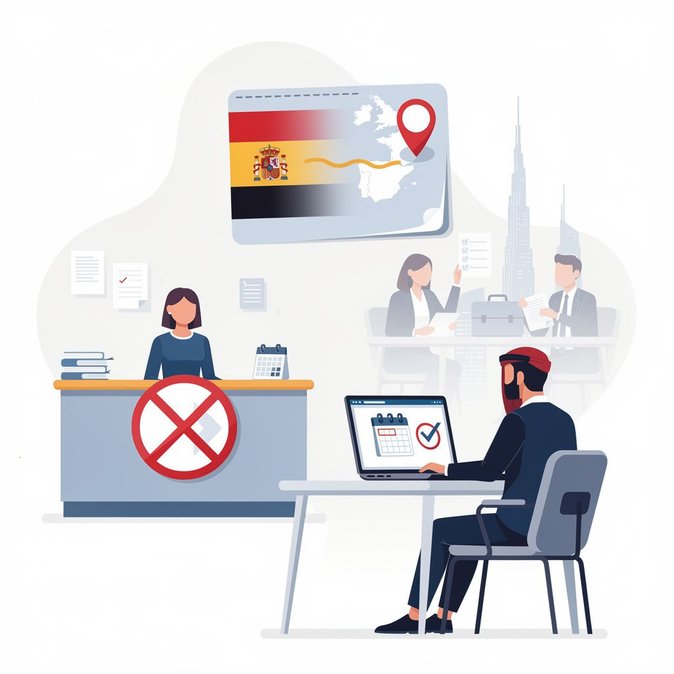
From July 29 BLS International, the outsourced service provider for Spain in the UAE, has turned off agency bulk-booking and is requiring every applicant to schedule their own appointment via its portal. The move follows months of complaints that bots and unauthorised ‘handlers’ were snapping up slots and reselling them for as much as Dh1,500, leaving genuine travellers stranded. For global-mobility teams moving staff between Dubai and Madrid—or routing executives onward to Latin America via Spain’s hub airports—the new rule is more than a bureaucratic tweak. Corporates can no longer rely on PROs or visa-facilitation firms to secure Schengen dates in bulk; employees must log in individually, enter passport data and answer security CAPTCHAs before a one-time SMS-OTP verifies the booking. Any slot reserved through a third party will be auto-cancelled at the Visa Application Centre. Spanish consular officials say the change should improve transparency and shorten queues. Appointment availability is expected to improve by up to 40 per cent once artificial demand from brokers is removed. Yet HR professionals warn that inexperienced travellers may mis-type data, leading to ‘no-show’ penalties or outright application rejection. Companies are therefore updating mobility policies to include training webinars and step-by-step booking guides. The immediate impact is most acute for summer business-school intakes and MICE groups heading to Spain in September. Airlines report a flurry of date-change requests as travellers wait for new appointment confirmations. Longer term, observers predict other Schengen states will watch closely; BLS also handles Italy, Czechia and Poland in the UAE, and similar crackdowns could follow if the Spanish model succeeds. Action points: Audit any outsourced Schengen-visa workflows, brief travellers to book directly, and allocate extra lead-time—currently 28–35 days from appointment to passport return—for Spanish business visas.
Source: Khaleej Times