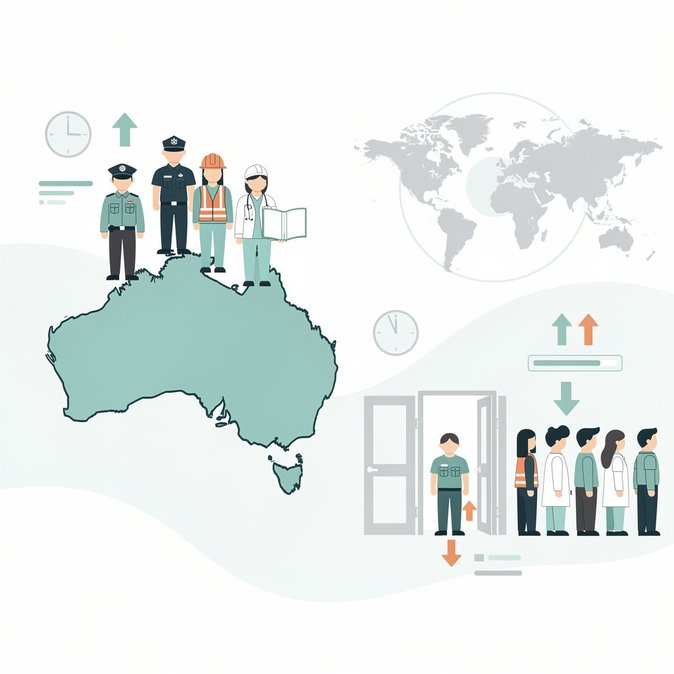
Australia’s inaugural Pacific Engagement Visa (PEV) ballot closed at midnight on 29 July, capping a frenetic four-week registration window that saw tens of thousands of Pacific Island and Timor-Leste nationals vie for just 3,000 permanent-migration places. The scheme, announced in 2025 and modelled on New Zealand’s long-running Pacific Access Category, provides successful registrants with a pathway to live and work in Australia permanently after securing a job offer and meeting health, character and English-language requirements. Home Affairs officials told regional media that interest far exceeded expectations, with online registrations peaking at 280 per minute in the final hours. Fiji, Samoa and Papua New Guinea accounted for the largest share, but smaller nations such as Kiribati and Tuvalu recorded the highest applications per capita. The ballot results will be drawn electronically in early August, with invitations to apply for the subclass 192 visa issued shortly afterwards. Those invited have 120 days to lodge a full application. For Australian employers—particularly in agriculture, aged care, hospitality and the trades—the PEV represents a new, faster route to recruit workers with permanent-residency certainty. Unlike seasonal-worker programs, the visa has no out-of-pocket costs for employers beyond standard recruitment expenses, and holders can move between sectors after their first year. Migration advisers are encouraging businesses with chronic vacancies to build PEV outreach into their talent strategies before the next ballot cycle opens in mid-2027. The program carries geopolitical weight as well. Canberra has framed the PEV as a “people-to-people” pillar of its Pacific policy, countering China’s growing influence by deepening migration links. Pacific leaders have largely welcomed the opportunity but urged Australia to ensure community-based settlement support and safeguards against exploitation—especially for rural placements where oversight can be thin. Home Affairs will publish full application statistics once the electronic draw is complete. Unsuccessful registrants can re-enter future ballots without penalty, and officials confirmed that unused places would roll over, keeping the annual cap at 3,000 primary applicants.
Source: Department of Home Affairs