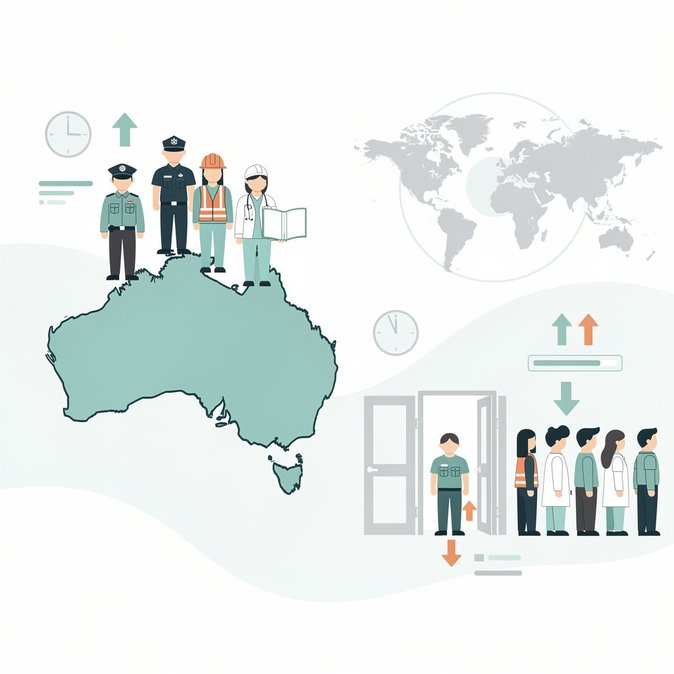
Australia’s Department of Home Affairs has quietly released Ministerial Direction 119, a binding instruction that reshuffles the processing order for a broad range of skilled-migration visas. Signed by Immigration Minister Tony Burke on 24 July and in force from 25 July, the Direction replaces the COVID-era Direction 105 and is the first major operational change since the government’s December 2025 Migration Strategy overhaul. What’s new? The Direction orders case-officers to process nominations and visa applications from people who are physically **in Australia** ahead of comparable applications lodged offshore. Within those in-country cohorts, law-enforcement and defence–related occupations sit at the top of the pile, followed by healthcare, teaching and construction roles tied to the government’s housing-supply agenda. Offshore applications in those priority occupations rank below their on-shore equivalents, while all other offshore applications fall to the end of the queue. Context. Net Overseas Migration (NOM) surged to 528,000 in FY 2024-25—well above Treasury’s sustainable band of 235-300,000. With political pressure mounting over housing costs and infrastructure strain, the Albanese government vowed to “rebalance” migration without slashing permanent skilled places. Prioritising people already contributing to the labour market gives ministers a lever to slow new arrivals while rewarding employers who have trained temporary visa-holders. It also dovetails with the new Skills in Demand (subclass 482) visa that replaced the TSS on 1 July. Practical implications for business. • Employers with sponsored workers already on the ground (e.g., bridging-visa holders or graduate-visa alumni) should see markedly faster decisions—critical for project staffing, payroll planning and employee retention. • Multinationals seeking to move talent into Australia from overseas should prepare for protracted timelines unless the role is in a top-tier occupation. • Migration advisers expect a spike in “visa-run” travel, as offshore applicants look to enter Australia on visitor visas before lodging skilled applications; compliance teams should warn assignees that this tactic carries risk. Next steps. Home Affairs has begun re-allocating caseloads and says existing pending files will be reordered automatically; sponsors do not need to re-apply. However, businesses are urged to update ImmiAccounts with any changes of circumstance to avoid delays. The department will publish new service-standard dashboards from September to give the market visibility into median processing times under the revised priorities. For global-mobility managers, Direction 119 is a clear signal that on-shore conversions are now the fastest pathway to permanent residence. Workforce planners should revisit talent-mobility policies, budget for longer lead-times on overseas hires, and map critical roles against the healthcare, teaching and construction lists to leverage priority processing.
Source: Department of Home Affairs