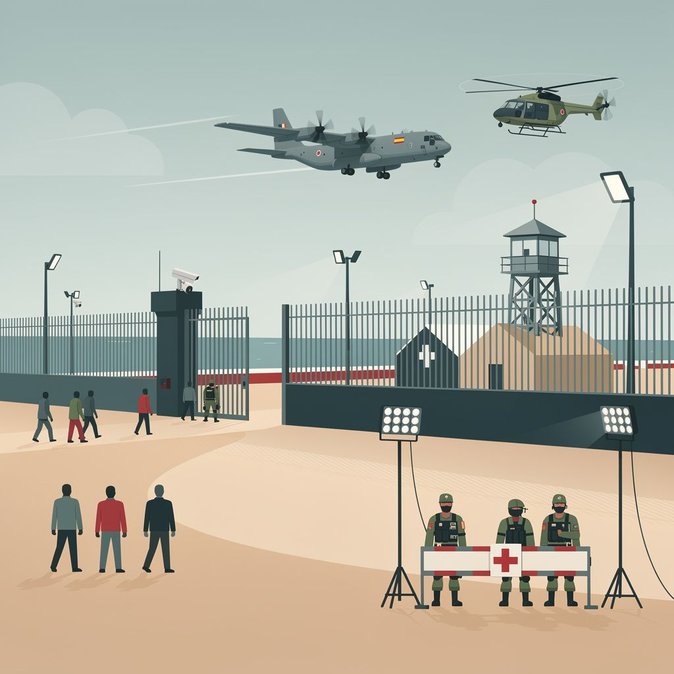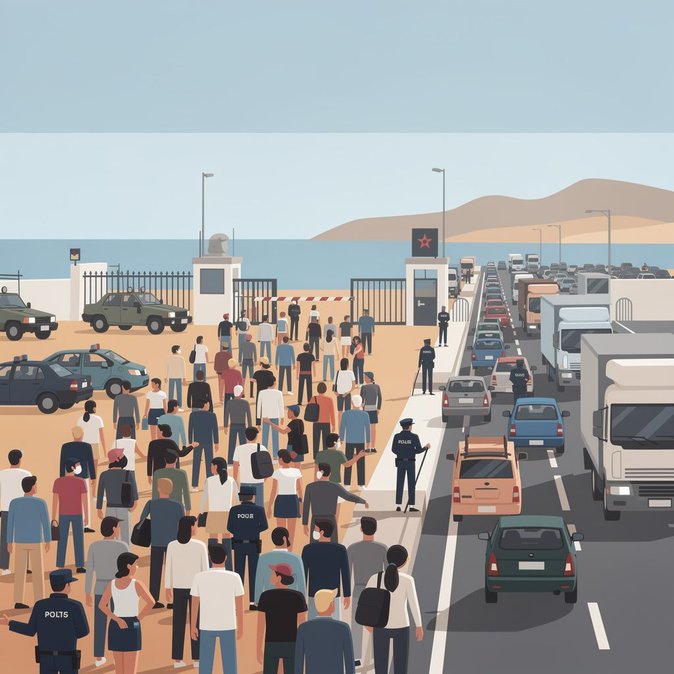
Spain’s land frontier with Morocco at Ceuta collapsed into chaos on the morning of 30 July when several thousand people crossed the razor-wire fence or swam round the break-waters almost unhindered. Witnesses reported that Guardia Civil officers were quickly overwhelmed, forcing authorities to bus new reinforcements from mainland Andalucía while the Interior Ministry asked the Army’s emergency brigade (UME) to stand by. The mass crossing comes less than three weeks after Spain’s Supreme Court issued a landmark judgment barring the immediate return of migrants intercepted at sea, insisting that the same guarantees of due process apply as for land arrivals. Human-rights groups hailed the decision, but officials in Ceuta warned it would create a “pull factor”—a prediction that appears to have materialised almost overnight. For global mobility managers the incident underlines how quickly jurisprudence can shift operational realities on Europe’s Mediterranean frontier. Although Ceuta is outside the Schengen area, the court ruling is rooted in EU fundamental-rights law and could influence Spain’s broader removal policy. Any long-term deployment of the Army or reinforcement of the fence would tighten controls and slow legitimate traffic, affecting cross-border workers and the 6,000 daily business-traveller movements usually recorded at the Tarajal crossing. Travellers scheduled to enter or leave Ceuta in the coming days should expect lengthy ID checks, vehicle back-ups on the N-352 coast road and possible ferry schedule changes at Algeciras. Companies relocating staff through the port of Tanger-Med should build extra time into transfer itineraries and monitor advisories from Spain’s Interior Ministry, which has activated its Integrated External Surveillance System (SIVE) along the Strait of Gibraltar. Employers with personnel holding Moroccan nationality should also note that overstays incurred while the border remains disrupted could complicate future Schengen visa applications.
Source: Associated Press