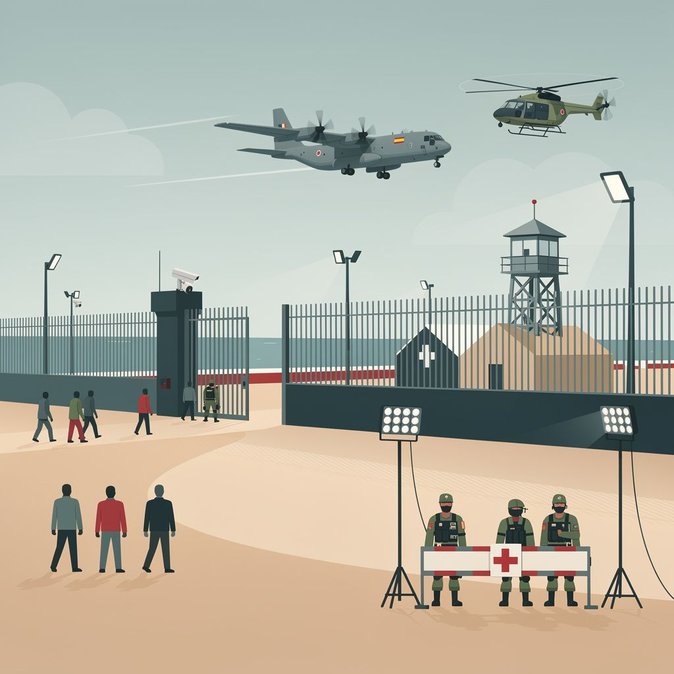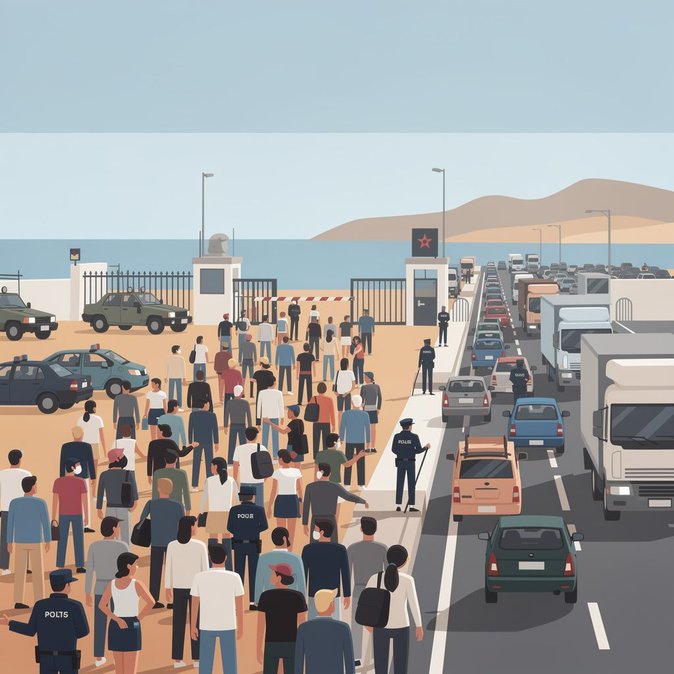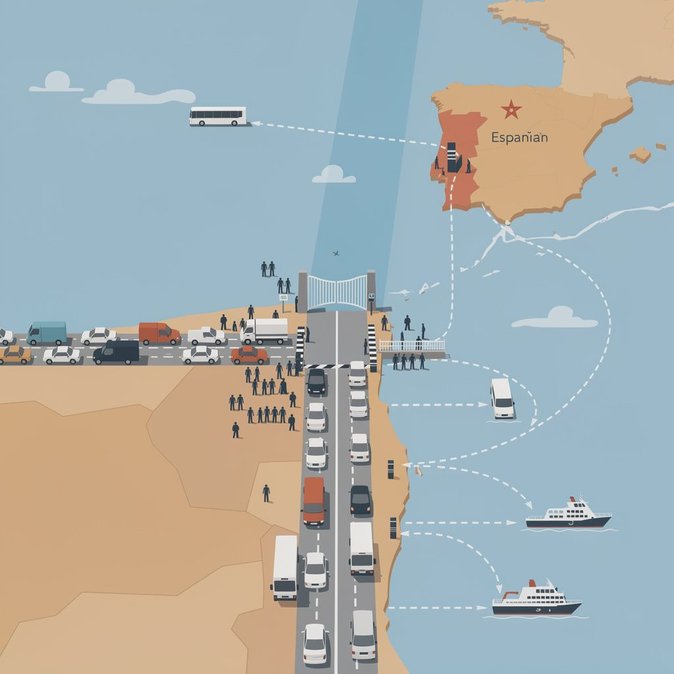
Spain’s smallest land border suddenly became Europe’s biggest mobility flash-point on the morning of 30 July when several thousand mostly Moroccan migrants forced their way around the break-waters that separate Castillejos (Fnideq) from the Spanish enclave of Ceuta. Video shot at Tarajal beach shows continuous streams of people – men, women and children – wading ashore shouting “¡Viva España!” before spreading through the port area and city centre. At least three drownings were confirmed by local activists, while emergency teams treated dozens for hypothermia and exhaustion. Local authorities reacted by closing the Tarajal crossing in both directions for several hours and suspending passenger sailings between Ceuta and mainland Algeciras. The shutdown came at the height of the annual Operación Paso del Estrecho (OPE), when 3.5 million Maghrebi expatriates normally transit Spain by road and ferry. Logistics operators told El País that lorries carrying time-critical goods were diverted to Cádiz and Málaga, adding “12-18 hours and significant cost” to Iberia–North-Africa supply chains. Business travellers booked on the popular 35-minute catamaran were re-routed via Gibraltar or forced to fly. Rachid Sbihi of the Civil Guard union described the situation as “absolute chaos … the frontier has totally collapsed”. Spain’s Interior Ministry said it was working with Morocco on rapid returns and that police reinforcements were already en route; by mid-afternoon more than 500 arrivals had been processed for readmission. However, migrant reception centres in Ceuta are now well over capacity, with hundreds sleeping on streets and sports halls – a public-order risk that worries local employers who rely on cross-border commuters. For companies moving staff or equipment through southern Spain, immediate impacts include unpredictable wait times at ports, temporary suspension of fast-track lanes, and stricter ID checks on all nationalities entering Ceuta or boarding ferries. Mobility managers are being advised to reroute through Tarifa or Tanger-Med until flows stabilise, and to build in at least 24 hours’ buffer for deliveries destined for mainland Spain via Ceuta. Airlines operating the short Málaga–Ceuta helicopter hop have reported a spike in last-minute corporate bookings. Longer-term, the episode will intensify pressure on Madrid – already deploying the new EU Entry/Exit System since April – to harden external controls while avoiding the politically explosive label of “national emergency”. With irregular sea arrivals to mainland Spain down 32 % this year, the Ceuta surge is a reminder that sudden corridor shifts can still up-end carefully planned mobility programmes.
Source: Associated Press