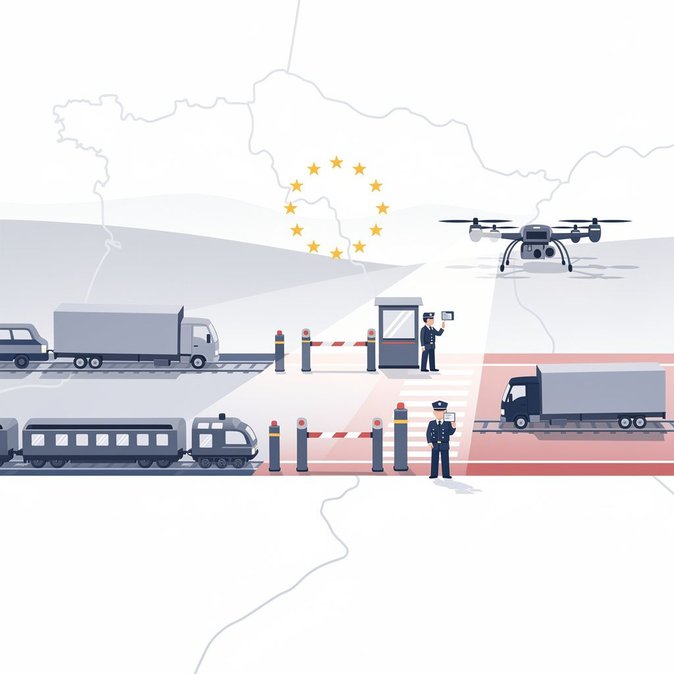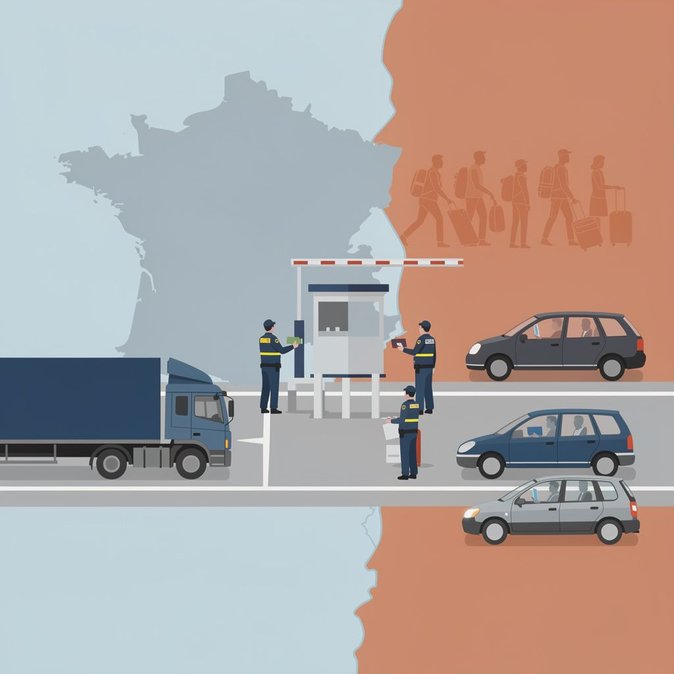
Late on 31 July 2026, President Emmanuel Macron announced that France has ordered strengthened police and customs controls at key road crossings with Spain—including the AP-7/A9 corridor at Le Perthús and the Basque pass at Biriatou—following Italy’s decision to suspend Schengen free-movement rules with Spain in response to the mass arrival of migrants in the Spanish enclave of Ceuta. The French move stops short of a formal re-introduction of border controls under Article 25 of the Schengen Borders Code, but allows gendarmes to carry out systematic ID checks, deploy mobile fingerprint units and increase vehicle searches for an initial ten-day renewable period. Interior Minister Gérald Darmanin said the aim is “to prevent secondary movements towards French territory and to support our Spanish partners in managing an exceptional situation at the EU’s external border.” According to the Ministry, reinforcement units from CRS 62 and mobile gendarmerie squadrons arrived in the Pyrénées-Orientales and Pyrénées-Atlantiques departments overnight, adding 480 officers to the 650 already stationed there. Although France routinely conducts targeted operations on its southern frontier—particularly ahead of major events such as the 2027 Rugby World Cup—this is the first time since November 2025 that checks have been ramped up without a specific terrorism alert. Transport operators report average delays of 30-45 minutes for coaches and light vehicles, and up to 1 hour for trucks, especially at the La Jonquera freight zone. The SNCF-Renfe high-speed rail link between Barcelona and Lyon remains unaffected, but rail police have increased onboard patrols. Logistics associations have called for clear signage and real-time information to minimise supply-chain disruption. Multinational companies with Girona or Bilbao distribution hubs are advising drivers to carry extra rest-time buffers and complete Advance Cargo Manifests to speed passage. Travel-management firms meanwhile urge business travellers to allocate additional transit time or route via Toulouse-Blagnac and domestic flights to Madrid. Diplomatically, the French initiative seeks to show solidarity with Madrid while avoiding the more drastic step taken by Rome. EU Home-Affairs Commissioner Magnus Brunner welcomed France’s “proportionate” response and confirmed that any prolongation beyond ten days would require formal notification to Brussels. The measure will be reviewed on 10 August in light of flows from Ceuta and operational data collected by Frontex liaison officers deployed on both sides of the border.
Source: Euronews