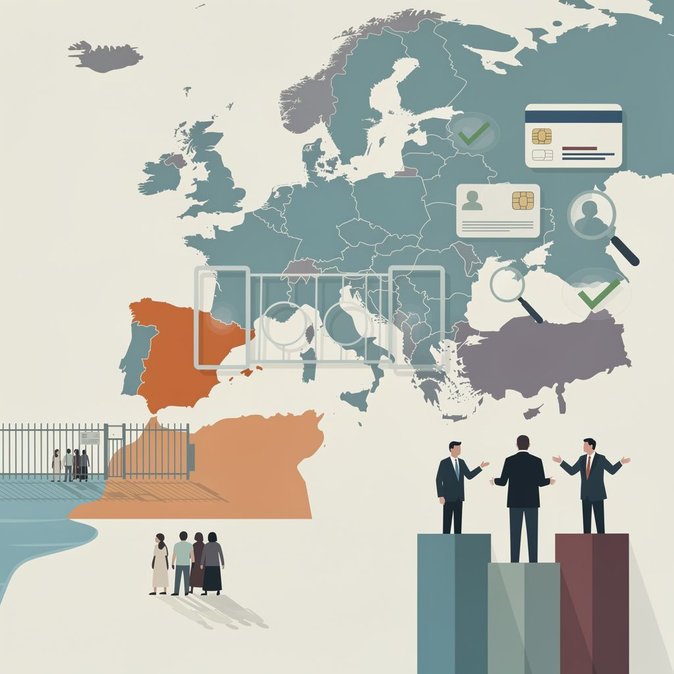
Hours after news broke of the Ceuta breach, leaders of Europe’s hard-right parties—from Italy’s Lega to France’s Rassemblement National—flooded social media blaming Madrid’s recent regularisation programme for “inviting an invasion.” El País reports that conservative groups in at least nine EU states issued coordinated statements through the Identity and Democracy group in the European Parliament on 2 August, calling for budget sanctions and the suspension of Spain from Schengen if it “fails to secure Europe’s southern flank.” Spanish officials counter that Morocco’s decision to relax policing at the Tarajal checkpoint—not domestic amnesties—triggered the rush. Nevertheless, the narrative has already entered national campaigns in Finland and Austria, where polls show migration eclipsing inflation as voters’ top concern. Analysts say the episode could accelerate efforts by centre-right governments to harden EU asylum procedures before next spring’s European elections. A draft proposal circulating in Brussels would give member states wider latitude to reintroduce internal border checks when another state “fails to uphold its external-border obligations.” For multinationals moving talent within the EU, rising politicisation means contingency plans should assume sporadic border checks—even between long-stable partners—over the next 12 months. Companies may also face pressure to justify assignments that rely on intra-company transferee permits if host-country politics turns hostile. The Ceuta crisis thus risks redefining not only Spain’s migration debate but the broader European conversation about mobility and solidarity.
Source: El País