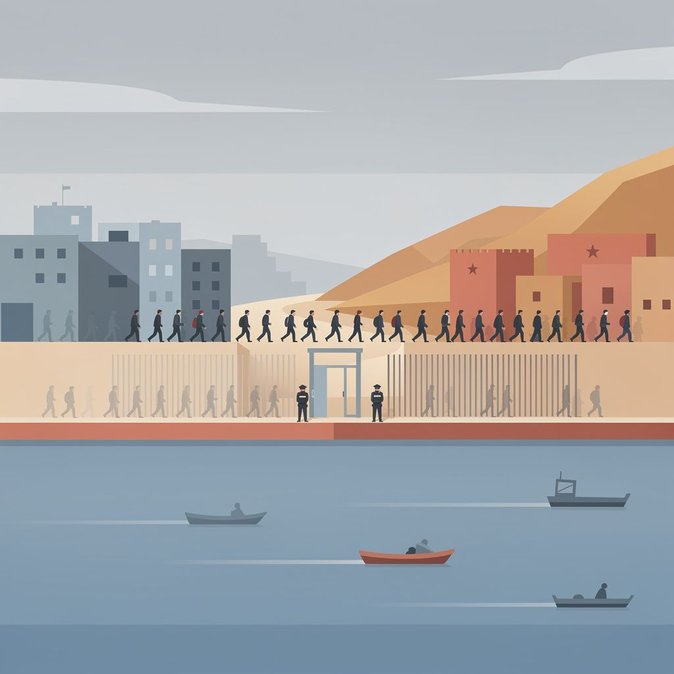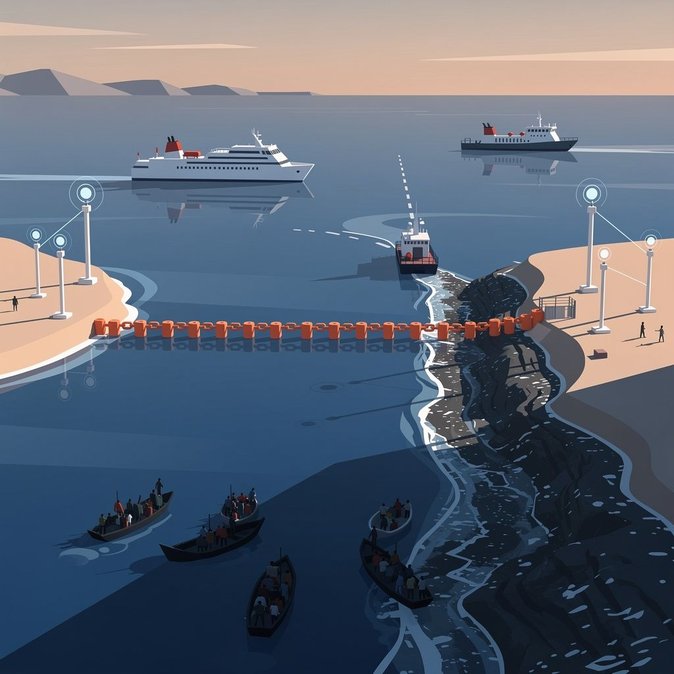
Barely 24 hours after the mass crossing, Spain’s Defence and Interior ministries rushed engineering units to Ceuta to install a floating, 500-metre-long containment barrier parallel to the breakwater that had been overwhelmed. Officials say the barrier—similar to the modular pontoon used off the Canary Islands last year—can be extended to one kilometre within three hours if needed. The emergency measure follows confirmation that at least 67 people died during the attempt to storm the frontier, either by drowning or in a fatal stampede. The government hopes the barrier will give security forces crucial minutes to position riot units along the promenade and direct would-be entrants towards the formal border post. Critics, including NGOs such as Caminando Fronteras, argue that floating obstacles create new drowning risks and merely shift pressure to other stretches of coast. From a mobility perspective the barrier underscores the trend towards physical deterrence infrastructure at EU external borders. Companies moving crew and equipment by sea between Algeciras, Ceuta and Tangier should anticipate ad-hoc maritime exclusion zones and longer harbour checks as the Guardia Civil deploys side-scan sonar and drones to monitor approaches. Legal experts note that temporary barriers do not alter Spain’s international obligations but do provide a factual basis for denying asylum claims filed outside official checkpoints. That could reduce last-minute visa-overstay defences in Spanish courts and accelerate removals, an issue global HR teams will need to watch when supporting staff facing deportation orders. Madrid insists the structure is provisional and will be removed once a joint ‘smart-border’ project with Morocco—combining radar towers and biometric gates—comes online in 2027.
Source: Associated Press