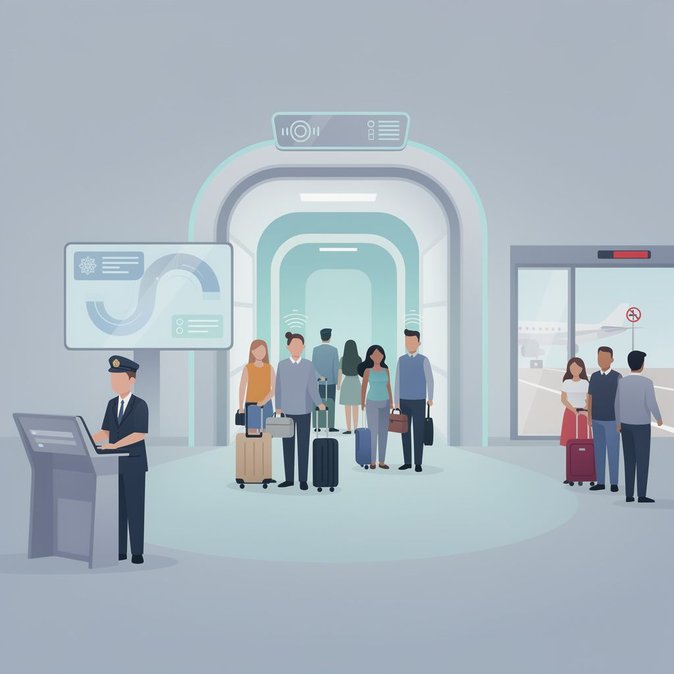
Passengers transiting Heathrow’s Terminal 3 this morning were the first to try the Home Office’s contactless border pilot, a cornerstone of the Pathway to Contactless (PTC) programme that aims to phase out passport presentation altogether by 2031. The trial extends to European Union and ‘B5JSSK’ nationals after an earlier limited rollout for British citizens in 2025. Under the scheme, travellers who have pre-enrolled their biometric and passport data can walk through a dedicated lane where high-definition cameras verify identity on the move. Border Force officers monitor a real-time risk dashboard but only intervene by exception. Heathrow’s regulatory submission to the Civil Aviation Authority notes the airport will install 102 additional e-gates and re-configure immigration halls over the next two years to support full deployment. According to the Home Office’s economic note on the enabling legislation, contactless processing is expected to cut transaction times by 30 %, freeing up staff and allowing the government to cope with forecast passenger growth without proportional head-count increases. Early adopters reported clearance times of under 10 seconds this morning—dramatically below the pre-pilot average of 45–90 seconds at an e-gate. From a corporate-mobility perspective the pilot could be transformative. Frequent business travellers will be able to enrol once and thereafter use any participating UK airport without queuing, mirroring the US Global Entry concept. Employers, however, should brief staff that enrolment is voluntary and that traditional e-gates remain available—important for travellers who may be uncomfortable with long-term biometric retention. Privacy advocates have called for robust oversight. Biometric data collected under PTC can be retained for up to 15 years. The Home Office insists the system complies with UK GDPR and that data are encrypted at rest and in transit. A statutory review is due after 12 months of live operation, giving stakeholders an opportunity to assess security, equality impacts and commercial benefits.