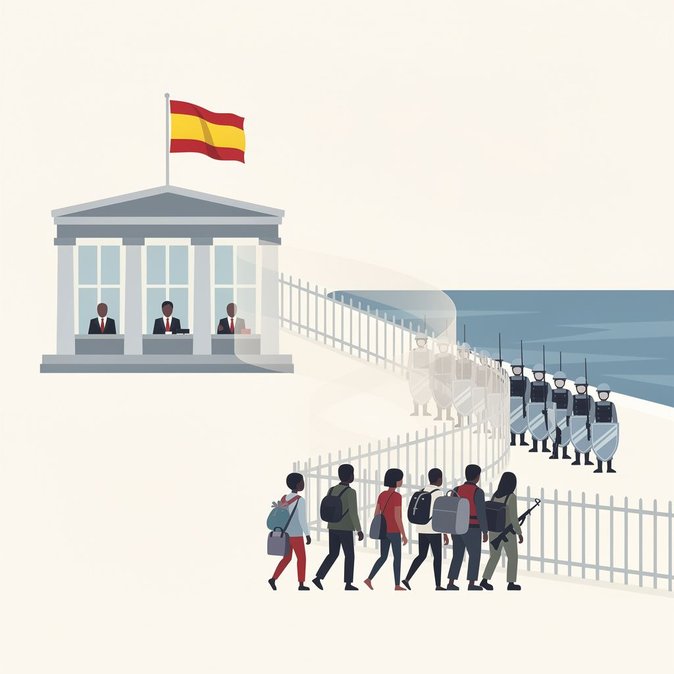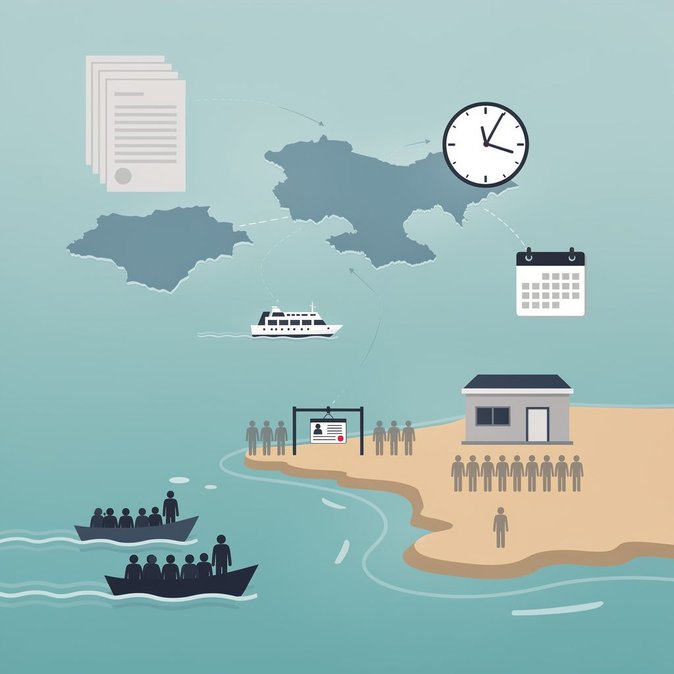
Spanish authorities confirmed on the evening of 15 September that two small boats (pateras) reached the coastline of Formentera within hours of each other, continuing a record-breaking year for irregular sea arrivals in the Balearic Islands. Fifteen people were detained on land at Punta Roja, while a Guardia Civil patrol vessel rescued a further 17 migrants 14 nautical miles south-east of the island. All passengers, believed to be of Maghrebi origin, were transferred to Ibiza for health checks and initial processing under Spain’s immigration law. The incident illustrates a strategic shift by smuggling networks that increasingly target the short but treacherous Algerian–Balearic corridor instead of the better-patrolled Strait of Gibraltar. According to Interior-Ministry data, 310 boats with 5,376 people have landed in the archipelago so far in 2026—already 73 % of last year’s total. Local officials warn that reception facilities on Ibiza and Mallorca are nearing capacity, forcing the redistribution of arrivals to mainland detention centres within 72 hours, as required by law. For employers with North-African labour programmes, the spike in maritime arrivals can complicate regular work-permit processing because extranjería offices in Palma and Ibiza must divert staff to registration duties after each landing. HR teams should expect slower turnaround for NIE numbers and digital-nomad visa appointments over the coming weeks. Companies moving equipment or seasonal staff to Formentera have also experienced sporadic ferry delays when Guardia Civil units requisition docking space for search-and-rescue craft. On the policy front, the Balearic government is pressing Madrid for an emergency redistribution mechanism similar to the one activated in the Canary Islands in 2024. Interior Minister Fernando Grande-Marlaska has promised an extra €4 million for reception capacity and rapid-deportation flights to Algeria, but human-rights groups argue that collective expulsions violate EU directives. Brussels will send a fact-finding mission next week, adding another layer of scrutiny to Spain’s border-management practices. Global-mobility managers should advise travelling employees to carry passports when island-hopping—even on domestic legs—as the Guardia Civil has stepped up spot ID controls at ports. Companies recruiting North-African talent may wish to fast-track visa applications through Spain’s Large-Companies Unit (UGE) to avoid local backlogs in the Balearics.
Source: Cadena SER