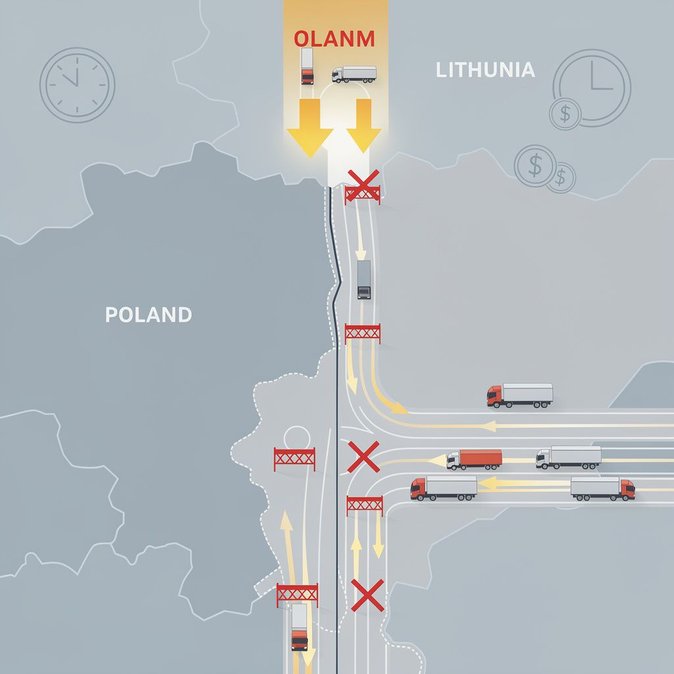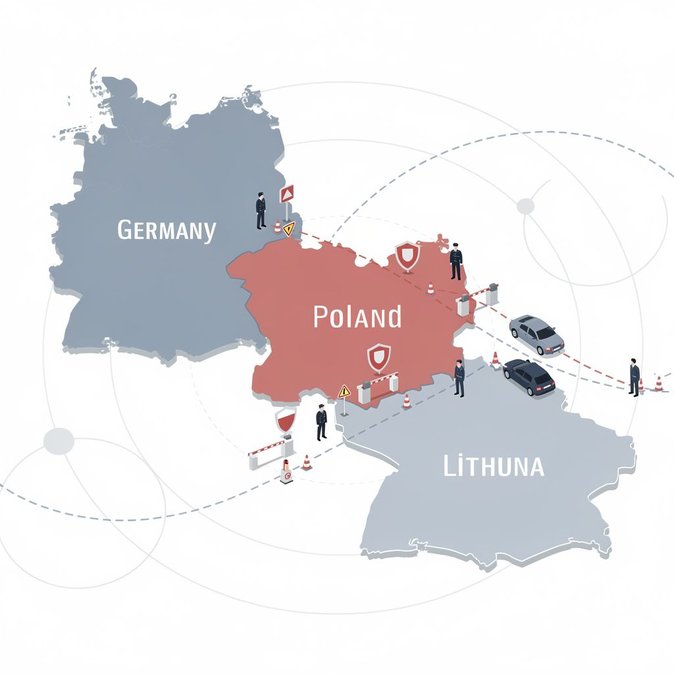
An updated list on the European Commission’s Schengen monitoring portal published on 14 September confirms that Poland has filed a fresh notification to prolong controls on its internal land borders with Germany and Lithuania from 2 October 2026 to 30 March 2027. The move is justified by “persistent migratory pressure” and security risks linked to Russia’s war in Ukraine. Poland first reintroduced spot checks on those borders in July 2025 to intercept people-smuggling networks exploiting the Belarus route. Under Schengen rules, internal checks are meant to be temporary, but can be renewed in six-month blocks if threats persist. Warsaw’s latest filing includes a reinforced risk assessment detailing higher detections of forged travel documents and a 17 percent year-on-year rise in asylum requests lodged immediately after entry from Germany. For business travellers and cross-border commuters the practical effect remains limited: passports or national ID cards continue to suffice, and average wait times rarely exceed five minutes. However, coach operators and corporate mobility managers should note that Border Guard spot checks can be more frequent during night hours, and random secondary inspections may require proof of employment or hotel reservations. The extension aligns with parallel measures by Germany and Austria, signalling that ad-hoc controls are becoming semi-permanent along the EU’s eastern migration corridor. Companies relocating staff within the region should ensure employees carry proof of EU residence rights, and logistics firms may need to factor occasional vehicle inspections into schedules.
Source: European Commission – DG HOME