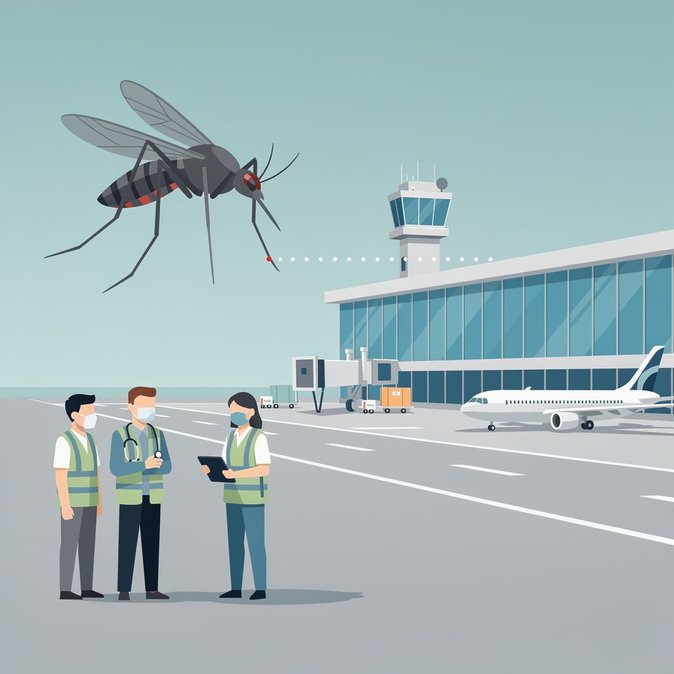
Two residents of Frankfurt-Schwanheim were diagnosed with Malaria tropica on 15 September, prompting the city’s health department to widen its active mosquito-monitoring zone around Frankfurt Airport. Officials suspect the infections stem from an imported Anopheles mosquito that survived in cargo holds or baggage bays—a phenomenon dubbed “airport malaria”. The new cases follow six infections among airport staff earlier this summer, two of which were fatal. A hotline (069 / 212-30030) has been set up and is receiving five to ten calls an hour from concerned locals. Vector-control teams are now trapping mosquitoes in logistics areas and nearby residential zones, while Lufthansa Cargo has reminded ground-handling agents to enforce aircraft-disinsection protocols on flights from endemic regions. For mobility managers, the incident underscores the occupational-health obligations of employers who post staff to air-side roles. Companies should verify that their travel-medicine providers offer rapid diagnostic testing and standby treatment for employees frequently working at or near Germany’s busiest hub. Travellers transiting Frankfurt remain at extremely low risk; Malaria is not transmitted human-to-human. Nonetheless, the episode may revive debates about mandatory aircraft disinsection and could influence EU guidelines as the Entry/Exit System increases passenger throughput.
Source: Handelsblatt (dpa wire)