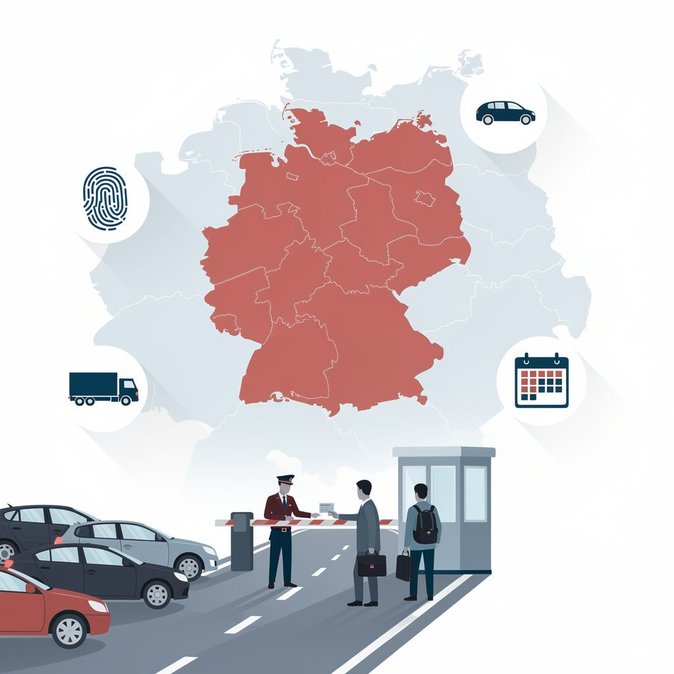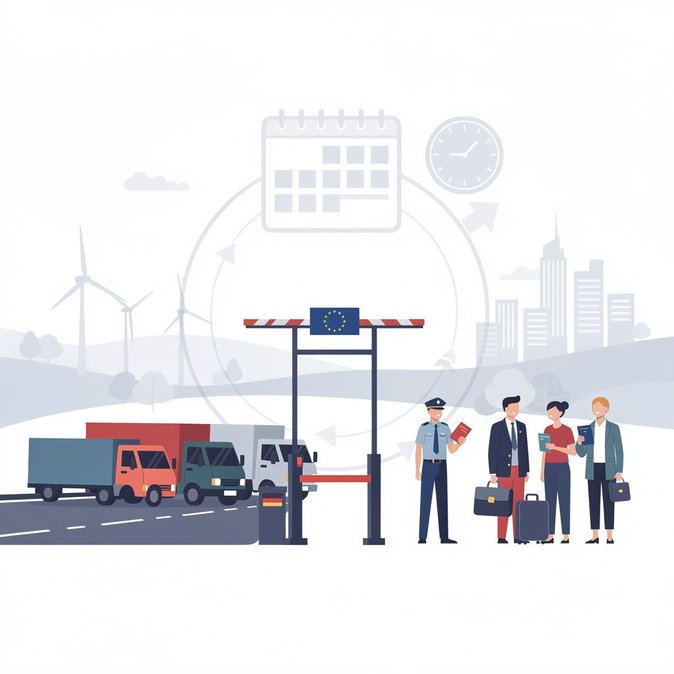
Germany has formally notified the European Commission that it will keep internal border controls in place for another six-month period beginning 16 September 2026 and ending 15 March 2027. The measure, published on the Commission’s list of current temporary controls, covers all nine of Germany’s land borders with France, Luxembourg, Belgium, the Netherlands, Denmark, Austria, Switzerland, Czechia and Poland. Berlin justifies the step with “continued serious threats to public security and order” stemming from high irregular-migration pressures, migrant-smuggling networks and capacity strains in the national asylum-reception system. Although German authorities have relied on targeted police checks inside the 30-kilometre border strip for years, the decision means systematic controls will remain the default at major road crossings and rail links. Business travellers and logistics operators must therefore continue to plan for document inspections, potential queues and longer journey times when moving goods and staff across Germany’s intra-Schengen frontiers. From a corporate-mobility perspective the extension has three immediate implications. First, companies running just-in-time supply chains to neighbouring EU states face a renewed need for schedule buffers and driver briefings. Second, posted-worker assignments and cross-border commuters must carry valid passports or ID cards as well as proof of employment to avoid delays. Third, HR teams should anticipate continued spot checks of posted-worker notifications under the German Minimum Wage Act, which customs officers often combine with border operations. Politically, the move signals that Berlin, alongside Vienna and Warsaw, is unlikely to lift controls until the EU finalises the long-awaited reform of the Schengen Borders Code and the New Pact on Migration and Asylum. The decision also arrives one day before Germany hosts the annual Federal Police migration-security summit in Potsdam, underscoring the government’s security narrative ahead of the 2027 federal budget debate. In practical terms, travellers entering Germany by air from another Schengen country will not be affected, as the measure is limited to land borders. However, airlines bringing connecting passengers who originate outside Schengen should remind travellers that random exit checks may occur on the German side, particularly at Munich and Frankfurt airports. Companies planning events or large staff rotations around Christmas or Carnival should therefore include additional travel time in their mobility policies.