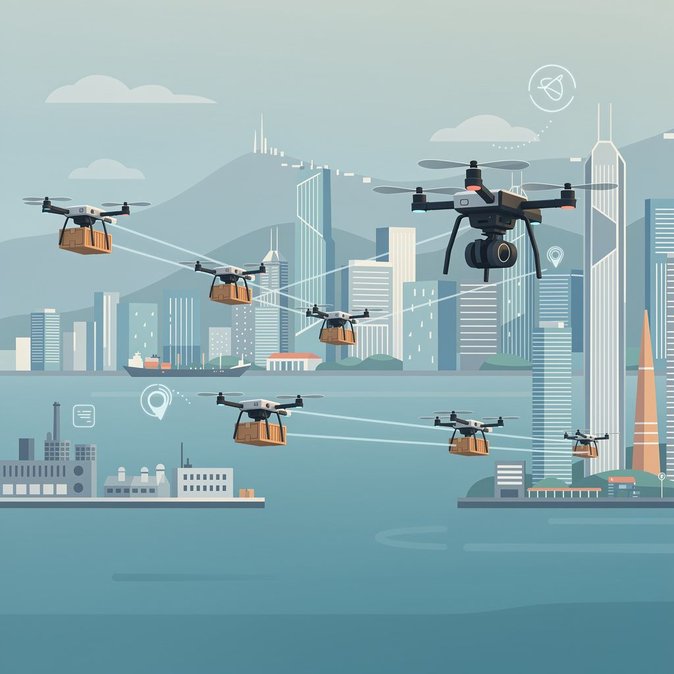
The 2026 Policy Address also unveiled an Action Plan to jump-start a “low-altitude economy”, including trial cross-boundary logistics flights across the Greater Bay Area and new legislation for heavy, non-traditional aircraft (over 150 kg). According to Transport-and-Logistics Bureau officials, the first tests will link logistic parks in the Northern Metropolis with warehouses in Shenzhen as early as mid-2027, using large-payload drones capable of carrying 100-kg consignments. The trials aim to slash last-mile delivery times for high-value components destined for science-park manufacturers and accelerate cold-chain shipments of biopharmaceuticals. Hong Kong’s Civil Aviation Department (CAD) will issue a consultative paper this quarter outlining air-worthiness standards, operator licensing and real-time geo-fencing requirements. Insurers and risk-management firms say the regulatory clarity is essential: without a defined regime for beyond-visual-line-of-sight operations, cargo underwriters have so far refused to cover drone fleets. For mobility managers the development could be transformative. Cross-border warehouse-to-factory legs that currently rely on trucking via the Shenzhen Bay Bridge—often delayed by peak-hour customs—could be completed in under 20 minutes. Multinationals in precision-electronics and fresh-food e-commerce stand to benefit first, but passenger-mobility players are watching closely; the same corridors could pave the way for air-taxi trials ahead of the 2029 East Asian Games bid. The government’s broader objective is to position Hong Kong as a regulatory sandbox for unmanned-aircraft systems in densely populated urban airspace—knowledge it can export to other Asian hubs eager to liberalise drone logistics.
Source: news.gov.hk