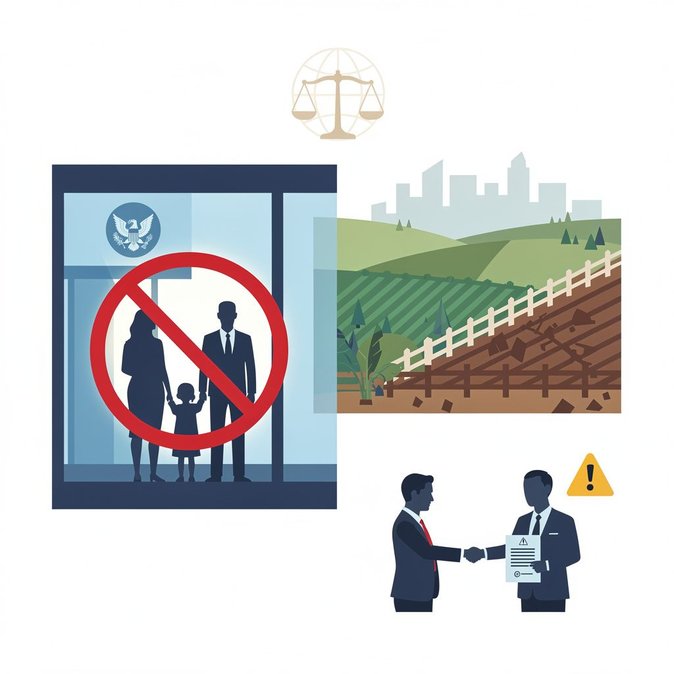
Secretary of State Mike Pompeo on Tuesday announced a new visa-restriction policy targeting South African government and party officials “responsible for, or complicit in, laws and practices that enable uncompensated land seizures and race-based discrimination.” The policy, issued under INA §212(a)(3)(C), allows consular officers to deny entry to individuals and their immediate families if credible information links them to human-rights abuses against minority farmers. An Associated Press bulletin on Wednesday confirmed that several senior provincial officials have already been found ineligible for U.S. visas, effectively barring them from personal travel and official visits. The move follows months of bilateral tension after Johannesburg advanced plans to expropriate white-owned farmland without compensation. For U.S. companies with South-Africa-based leadership or procurement ties, the policy introduces a new layer of compliance risk. Corporate travel departments must screen South-African counterparts for potential inclusion on the undisclosed list and prepare for sudden visa denials that could derail board meetings or investor road-shows in the United States. The announcement also signals a wider readiness by Washington to wield immigration tools in support of property-rights and human-rights objectives—a trend already seen in visa bans linked to corruption and digital-surveillance abuses in other regions. Multinationals operating in politically sensitive markets should expect closer scrutiny of senior managers’ conduct and be proactive in documenting respect for minority and land-use rights. South Africa’s foreign ministry condemned the action as “unwarranted interference,” and hinted at reciprocal measures. While retaliation is unlikely to target ordinary U.S. visitors, companies should watch for any tightening of work-permit rules or customs inspections that could slow project deployments.