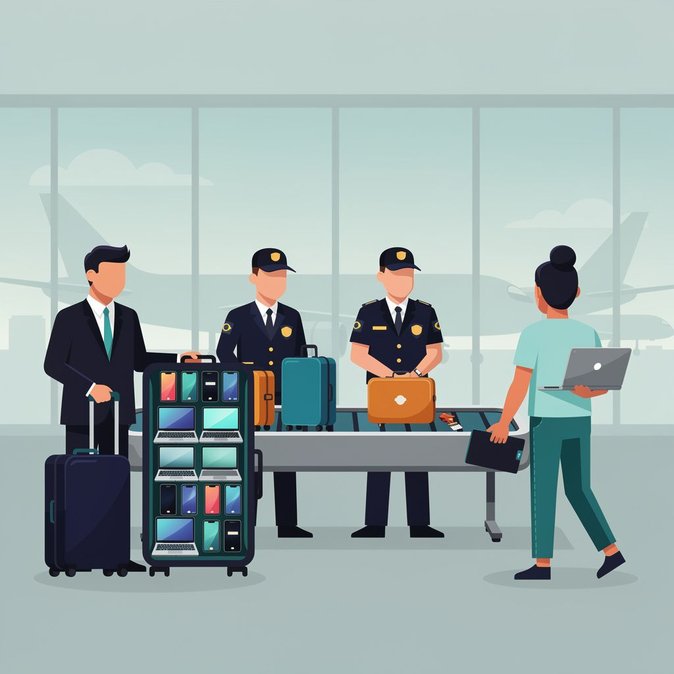
Brazil’s Federal Police (PF) carried out dawn raids in Rio de Janeiro and Maricá on 17 September 2026 as part of Operação Conexão Paralela, an investigation into a ring that smuggled high-value smartphones and laptops through airports without paying import duties. Six search-and-seizure warrants were executed and large volumes of unmanifested devices were confiscated, with officials estimating losses to the treasury at over R$60 million. According to PF spokespeople, the scheme relied on couriers posing as tourists to bring multiple devices in their personal luggage. A serving military police officer is alleged to have coordinated the logistics, instructing travellers on how to avoid the “Nada a Declarar” customs channel and using messaging apps to place orders with overseas suppliers. The investigation began after an anonymous tip via the agency’s ‘Comunica PF’ whistle-blower platform and quickly uncovered bank transfers that linked the retail resale of the contraband to a chain of informal electronics stores in the Greater Rio area. While the case centres on tax evasion, mobility managers should take note of the operational fall-out: Receita Federal (Customs) announced that, effective immediately, there will be reinforced secondary inspections on arriving international flights at Rio-Galeão (GIG) and Santos Dumont (SDU) airports. Business travellers carrying multiple electronic devices for legitimate work purposes—such as demo units or IT equipment—may face longer screening times and be asked for invoices and temporary-import paperwork (Carnet ATA or CPD). Failure to produce proof of ownership could result in seizure and fines of 50 % of the customs value. The crackdown aligns with Brazil’s broader push to modernise border management ahead of the 2027 Pan-American Games, when the country expects a surge in visitors. In the past year, PF has rolled out AI-enabled baggage-scanners in São Paulo-Guarulhos and Brasília; similar technology is now being installed in Rio. Companies should brief travellers to arrive earlier, pre-register high-value equipment on e-Declaração forms and retain purchase receipts in English or Portuguese. Looking forward, the Ministry of Finance is considering raising the personal-allowance threshold for goods brought in luggage from US$500 to US$1 000, but only if compliance improves. Operação Conexão Paralela will serve as a test case: if successful prosecutions follow, authorities may feel confident relaxing limits. Until then, corporate mobility teams should build an extra hour into itinerary planning for flights landing in Brazil’s major hubs.