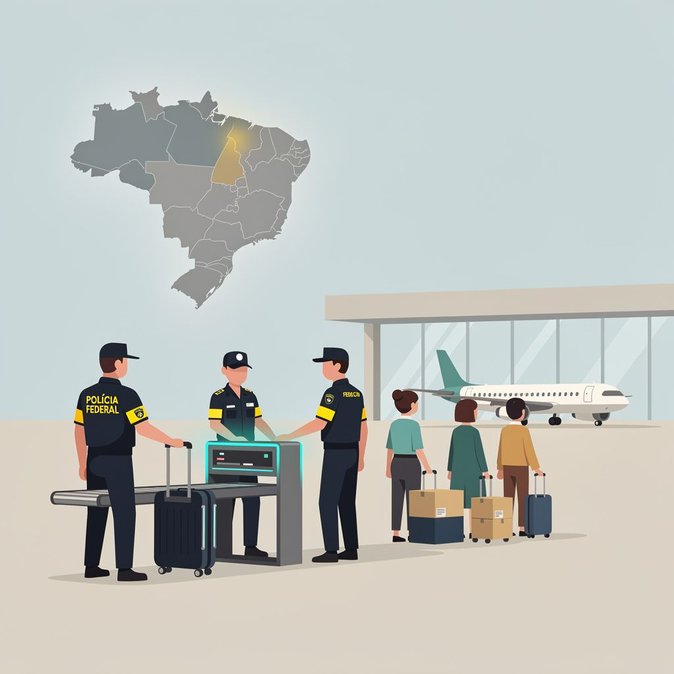
Travellers using regional airfields in Goiás and neighbouring states faced unusual screening delays on 15 September after the Federal Police (PF) launched ‘Operação Pouso Forçado,’ a sting targeting a cartel that allegedly moved more than 340 kg of cocaine on small charter aircraft. Officers executed four search-and-seizure warrants in Ribeirão Preto (São Paulo) and inspected maintenance hangars at secondary airports used by the group. While the PF stressed that commercial passenger services were not the main focus, airport managers at Goiânia-Santa Genoveva (GYN) and Jataí noted longer queues at domestic departure gates as federal agents carried out spot checks on luggage and air-cargo pallets. Two regional carriers—GOL Linhas Aéreas and Azul—issued travel advisories urging passengers to arrive at least 90 minutes before flight time. No cancellations were reported, but several evening departures left 30–45 minutes late. For business travellers the incident is a reminder that Brazil’s interior air network can be disrupted by law-enforcement activity with little notice. Companies running fly-in-fly-out operations to agribusiness sites or energy projects in Goiás, Mato Grosso and Minas Gerais should build buffer time into itineraries this week and monitor PF alerts. Cargo compliance teams should also review chain-of-custody procedures for high-value or time-critical shipments transiting smaller airports, which the PF says are increasingly exploited by organised crime. Officials indicated that heightened inspections would ‘gradually return to normal’ after forensic teams finish cataloguing aircraft and hangar records, likely by the weekend. However, they hinted at further enforcement waves in the run-up to Brazil’s October municipal elections, when intelligence units expect money-laundering syndicates to ramp up cash movements by air.