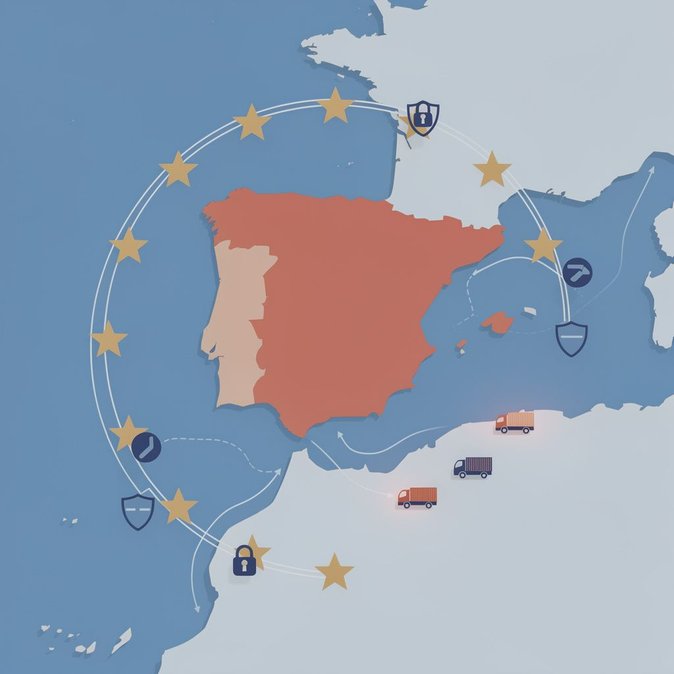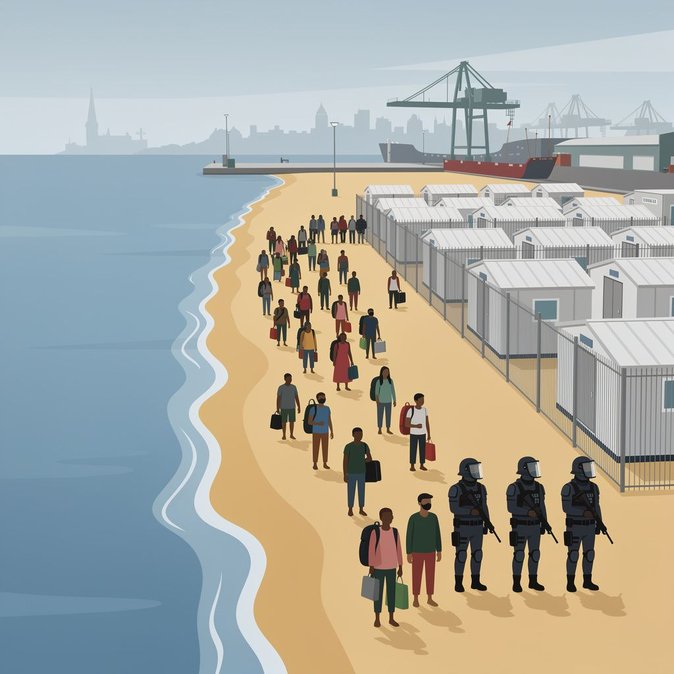
In the early hours of September 18 Spanish riot police—backed by army units—launched the largest security operation the North-African enclave of Ceuta has seen since the mass crossings of July 30-31. At sunrise officers moved along the El Trampolín and Playa del Chorillo beaches, where an estimated 10,000 mostly Moroccan and sub-Saharan migrants had been camping for weeks. After loudspeaker warnings, police fired rubber bullets into the air to disperse crowds and formed cordons to channel people toward the port area. Inside Ceuta’s commercial port the Interior Ministry has erected a new temporary reception centre with 1,700 beds. Adult men are being transferred there for identification and processing; women and unaccompanied minors are being taken to separate facilities run by the regional government. Authorities say the goal is to end the highly visible beach encampments that have dominated Spanish media and to start formal return or asylum procedures. Human-rights NGOs welcomed the removal of families from the open sand but criticised the late timing and limited capacity of the new camp. They estimate at least 4,000 people will still be sleeping rough unless further accommodation is opened. The government insists more space will come on-line within days and stresses that medical screening and food services are already operating at the port site. For businesses the clean-up is vital. Ceuta’s beaches are the city’s main tourist draw and prolonged images of disorder threatened autumn bookings. Shipping lines plying the busy Algeciras–Ceuta ferry route had warned of possible schedule cuts if security did not improve. The operation also sends a signal to Schengen partners—particularly Italy and France, which have re-introduced checks on travellers from Spain—that Madrid can police its external border. Longer term the success of the clearance will hinge on swift processing of return agreements with Morocco and on EU support for reception infrastructure. If those pieces fail to materialise, pressure may simply shift from the beaches to overstretched city streets, reviving political tensions in Madrid and Brussels alike.
Source: Reuters