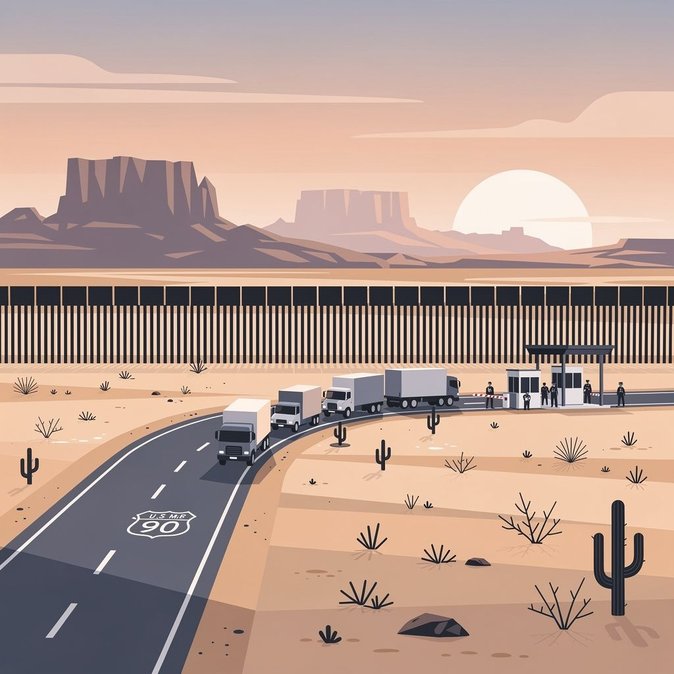
U.S. Customs and Border Protection crews this week installed the first steel panels of a 30-mile barrier slicing through the remote Big Bend region of West Texas, marking the Trump administration’s first physical expansion of wall infrastructure since early 2025. Photos taken September 16 and published September 18 show cranes lowering bollards on rugged ranchland near Comstock, an area prized by ecotourism operators and historically spared from large-scale fencing. Homeland Security officials say the US$46 billion project—funded through a mix of reprogrammed Pentagon money and new congressional appropriations—will eventually include all-weather roads, underground sensors and autonomous surveillance towers. Supporters argue that closing this desert gap will deter smuggling corridors that feed into Interstate 10, while critics counter that the terrain’s natural obstacles already slow crossings and that fencing will damage fragile wildlife habitats and private property values. For corporate mobility planners, the key implications are operational, not political. Companies that rotate staff between Texas and northern Mexico—particularly in energy, aerospace and maquiladora supply chains—should anticipate heavier checkpoints on U.S. Highway 90 and possible construction-related detours that add hours to cross-border drives. CBP has not yet indicated whether new inspection stations will accompany the wall segment, but similar builds in Arizona in 2025 led to random cargo searches up to 75 miles inside the border. Legal advocates also warn that expanded physical barriers often coincide with “zero-tolerance” enforcement surges that can ensnare workers who forget I-94 cards or face system glitches. Employers should refresh document-retention protocols, ensure company vehicles carry updated registration and insurance papers, and monitor CBP’s Big Bend Field Office alerts. While the physical wall does not change admissibility rules, it reshapes the enforcement landscape that global-mobility teams must navigate on the ground.
Source: Associated Press