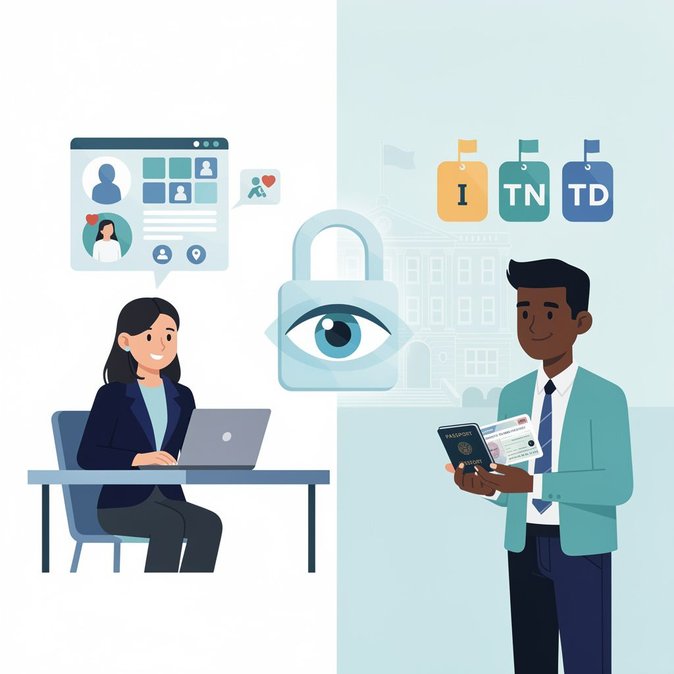
In a late-day notice posted September 18, the U.S. Department of State announced that, effective October 1, consular officers will scrutinize publicly available social-media profiles for three additional non-immigrant visa classifications: I (foreign media representatives), TN and TD (USMCA professionals and their dependents). Applicants in these categories must ensure that all social-media accounts are set to “public” prior to interview scheduling. The move extends rigorous online-presence screening that has applied since 2025 to F-1 students, H-1B specialty workers, J-1 exchange visitors, K fiancé(e)s and numerous other classes. According to the notice, the policy aims to give adjudicators “every available source of information” to identify security or fraud risks. Consular officers will search for posts suggesting extremist sympathies, misrepresentation of employment, or intentions inconsistent with claimed visa purposes. For employers, the biggest impact falls on the North American free-trade TN category, widely used by U.S. subsidiaries to onboard Canadian and Mexican engineers, accountants and scientists on short notice. HR teams should now brief candidates that consular staff will review LinkedIn, X/Twitter, Instagram and other platforms for position titles matching the job letter and LCA equivalents. Inconsistent role descriptions could lead to 221(g) administrative processing or outright refusal. Media organizations must likewise prepare foreign correspondents for heightened transparency. Posts critical of U.S. policies remain protected speech, but any indication that the journalist intends to engage in unauthorized non-media work could jeopardize the visa. Legal counsel recommend archiving older content and reviewing privacy settings well before travel. While privacy advocates question the efficacy of social-media vetting, the State Department reiterates that “every visa adjudication is fundamentally a national-security decision.” Companies counting on seamless cross-border movement should incorporate social-media audits into their pre-travel checklists without delay.