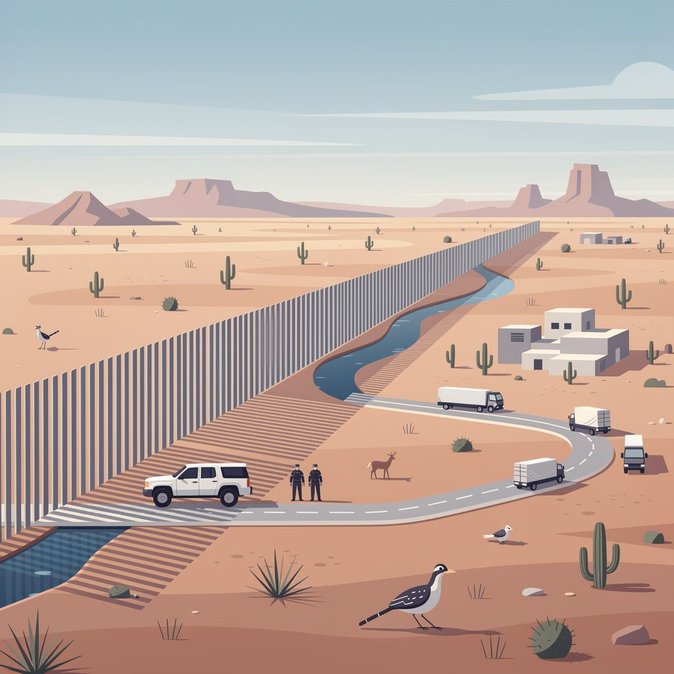
Customs and Border Protection confirmed to the Associated Press on September 18 that cranes have started lifting 30-foot steel panels into place along a 47-mile stretch of the Big Bend border sector in Hudspeth County, Texas. The project – labelled “Big Bend 1” – is the first physical wall construction in the vast, sparsely populated region beloved by ecotourists and ranchers, and signals the Trump administration’s intention to finish 500 miles of new barriers there despite fierce local resistance. CBP says it is now installing an average of 12 miles of barrier per week along the 2,000-mile U.S.–Mexico frontier, double the pace recorded earlier this year. For mobility and trade professionals, Big Bend has long been a low-traffic corridor; critics argue the wall offers little security value while jeopardising cross-border tourism, environmental preserves and potential future ports-of-entry that could stimulate regional commerce. Opponents – including landowners, the No Big Bend Wall Coalition and several hospitality businesses – have filed suit, claiming the project will block wildlife migration and deter visitors drawn to the dark-sky parks and river-rafting routes that underpin the local economy. CBP counters that the design includes vehicle barriers, all-weather patrol roads and technology sensors that together create “operational control” where terrain currently hampers quick response. For companies with expatriate staff or logistics routes running through west Texas and northern Chihuahua/Coahuila, the immediate operational impact is limited: construction zones are remote and legal crossings remain open. Longer term, however, finished walls could redirect irregular migration toward busier ports, tightening CBP inspection resources and potentially lengthening wait times for commercial vehicles elsewhere along the border. Mobility teams should monitor CBP’s Big Bend construction map and be prepared for temporary closures of informal river access points popular with adventure-tour operators. They should also track any environmental litigation that could halt work and create scheduling uncertainty for infrastructure contractors and suppliers.
Source: Associated Press