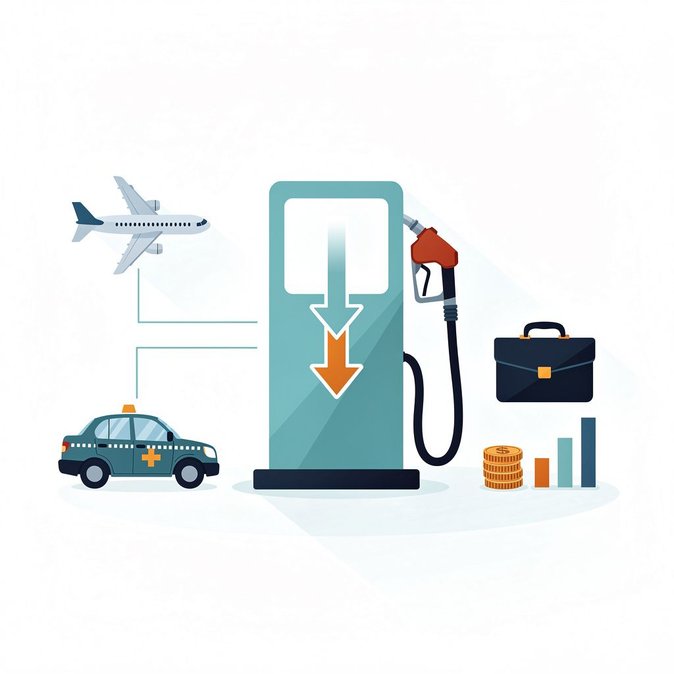
The Czech government will unveil measures on Monday to counter surging fuel prices, Industry & Trade Minister Karel Havlíček told Radio Prague International on Sunday. Petrol has already breached CZK 45.50 per litre and diesel CZK 49, driven by global supply constraints. While details are under wraps, past interventions have included excise-duty cuts and caps on retailer margins. For corporate mobility teams, any fiscal move that stabilises fuel prices matters. Rising pump costs feed directly into airfares – jet fuel formulas in many European airline contracts are indexed to regional diesel benchmarks – and inflate the mileage rates companies pay mobile staff and assignees. Ground transport is also hit: a 10 % hike in diesel over the past month has prompted Czech shuttle provider Umbrella Coach & Buses to add a temporary CZK 4 per-kilometre surcharge, already accepted by several multinational clients. The timing is sensitive. Czech outbound corporate travel is approaching its autumn peak, with major trade fairs in Frankfurt and Milan plus the NATO Days event in Ostrava attracting thousands of fly-in visitors. Travel-management company CWT Prague says some clients have delayed ticket issuance for October trips in the hope that government action will calm markets and bring fares down a notch. If Prague follows previous patterns, relief could come via a short-term excise reduction similar to the CZK 1.50 per litre cut introduced in spring 2024, or by releasing strategic reserves to wholesalers. Either approach would feed through to lower jet-fuel surcharges within 4–6 weeks, analysts at Komerční banka estimate. Mobility managers should watch Monday’s post-cabinet press conference and be ready to update travel budgets, per-diem tables and relocation allowances accordingly.