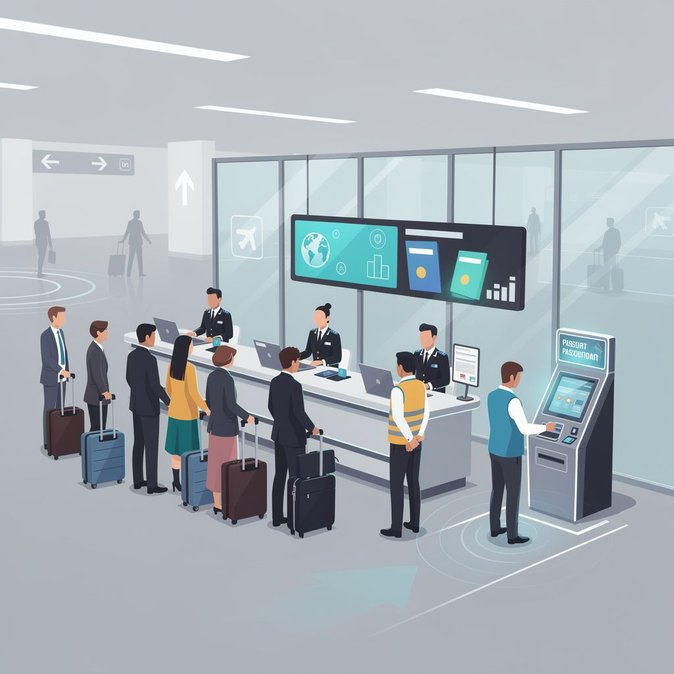
Prague’s Václav Havel Airport has moved quickly to tackle a surge in waiting times at its non-Schengen passport booths after the roll-out of the EU’s new Entry/Exit System (EES). At an extraordinary board meeting on 18 September, executives approved a package of short-term fixes and longer-term process changes designed to restore a 30-minute maximum wait for travellers from third countries. The airport will immediately redeploy staff from less-busy areas, open an additional ad-hoc checkpoint in Terminal 1 and widen passenger corridors to reduce bottlenecks. A dedicated “EES Assistance Team” will roam the arrivals hall to help confused passengers complete the biometric self-service registration that is now mandatory for visa-free and visa-required visitors alike. Families with children and seniors will be fast-tracked, and bottled water will be distributed automatically whenever queuing times exceed set limits. Management is also working with the Czech Foreign Police and the Ministry of the Interior on a medium-term digital solution that would let airlines collect EES data in advance and transmit it to border guards before landing. If approved by the EU’s IT Agency eu-LISA, the pre-registration tool could be piloted on busy long-haul routes as early as the Christmas peak. For companies flying in large numbers of non-EU staff, these measures may save valuable time and lower the risk of missed connections to onward Schengen flights. Travel managers are nonetheless being urged to brief employees on the new two-step process—first the kiosk, then the manned booth—and to allow at least an extra 45 minutes for arrivals until the upgrades are completed later this autumn. The episode is an early test of how quickly Europe’s busiest mid-sized hubs can adapt to EES, which is scheduled to be fully operational across the Schengen Area by the end of 2026. Other regional airports will be watching Prague closely as they prepare their own passenger-flow simulations.
Source: Prague Daily News