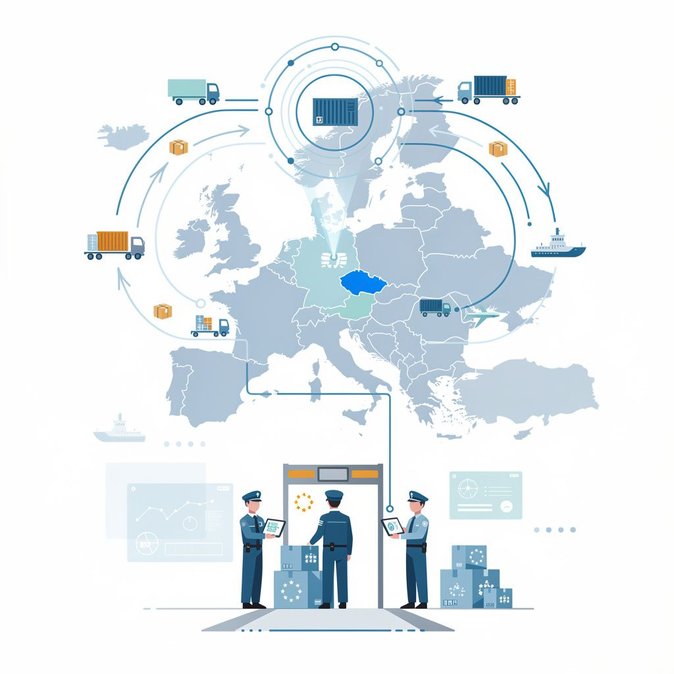
The Czech Customs Administration (Celní správa ČR) has confirmed that the European Union’s long-awaited reform of the Customs Code entered into force on 19 September and was formally presented to the public on 21 September. The new legislation represents the most sweeping overhaul of EU customs rules since the customs union was created and responds to booming e-commerce, rising security risks and an ever-growing volume of third-country goods entering the single market. Under the reform, 111 separate national IT solutions will be replaced by a single, EU-wide data architecture centred on a new EU Customs Authority (EUCA) and an EU Customs Data Hub in Lille. Czech customs officers will gain real-time access to import and export data from across the Union, allowing them to target high-risk consignments before they reach Czech territory. According to a statement by Deputy Director-General Jiří Trousil, the change will "transform customs into a modern, data-driven service that shields consumers from dangerous products while slashing red tape for legitimate traders." For Czech importers and exporters the biggest practical benefit is a "single Customs Window" through which all declarations can be lodged, irrespective of the member state through which goods physically enter or leave the EU. Companies will upload their documentation only once; customs authorities will share the data internally, reducing duplicate submissions and cutting clearance times. Small and medium-sized enterprises, which make up the bulk of Czech exporters, are expected to see a significant drop in brokerage and compliance costs. The code also tightens enforcement. Enhanced risk-analysis tools will correlate trade flows with transport data and previous infringements, enabling customs to spot fraud or sanctions-busting schemes earlier. The Czech Customs Service notes that non-compliant or unsafe products were found in a "high proportion" of spot checks in recent years; the new system should intercept many of these items upstream. Implementation will be staged: the EU Customs Authority launches in 2027, the Data Hub in 2028, and voluntary use of the new clearance model begins in 2031. From 2034 it will be mandatory EU-wide. Prague has pledged to work closely with Brussels to ensure Czech traders can migrate smoothly and to offer training on the revamped electronic procedures. Companies that trade heavily with partners outside the EU—particularly in the automotive, electronics and e-commerce sectors—should start mapping their data flows now to be ready for the digital switchover.
Source: Celní správa ČR