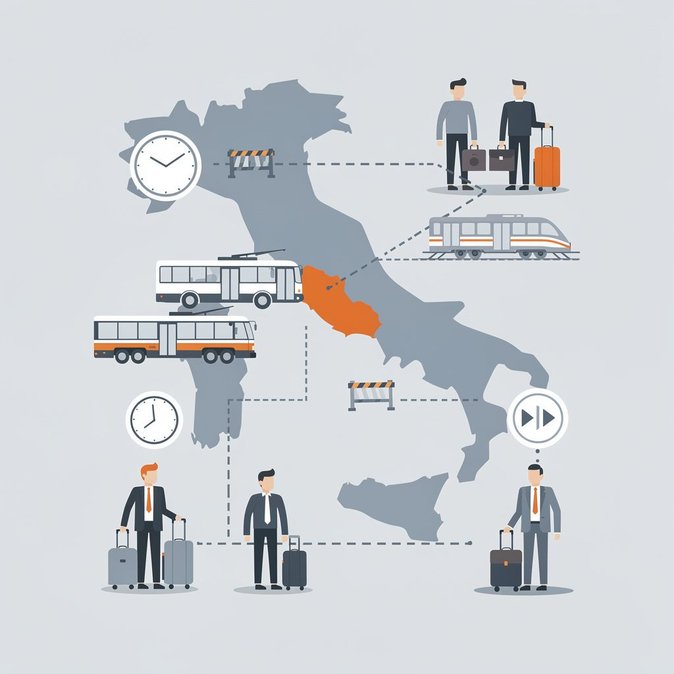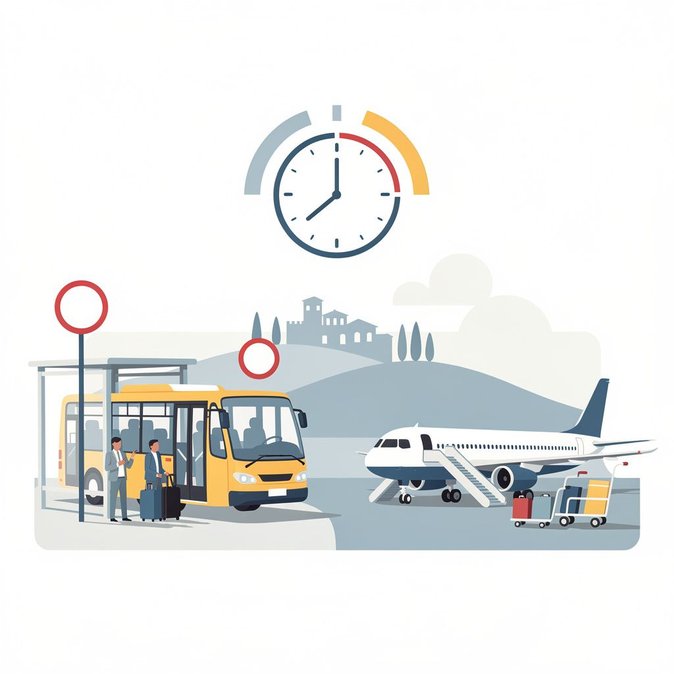
The Ministry of Transport’s official strike register, refreshed at 06:40 on 22 September, confirms a fresh wave of industrial action that mobility managers need to factor into travel plans. For today, the most disruptive protest involves staff of Busitalia-Sita Nord in Umbria, on a 24-hour walk-out that is already causing gaps in Perugia-based regional bus services. Essential commuter lines are guaranteed in the 06:00-09:00 and 18:00-21:00 windows, but off-peak links—often used by visiting executives between factory sites—are heavily reduced. More significantly for business flyers, handlers and ground staff at Toscana Aeroporti as well as GH Toscana have filed a four-hour strike for tomorrow, 23 September (13:00-17:00 local time) at Pisa and Florence airports. While ENAC will enforce minimum service levels, airlines have begun to pre-emptively consolidate schedules; travellers transiting through the two Tuscan gateways should re-confirm itineraries and allow for potential last-minute gate changes. Looking further ahead, a coordinated ENAV air-traffic-control protest is slated for 30 September, affecting multiple Italian airports for four hours in the early afternoon. Freight forwarders relying on belly-hold capacity should plan contingency routings through Milan-Malpensa or Rome-Fiumicino. Employers are reminded that strikes announced on the MIT list are deemed ‘known disruptions’; failure to mitigate may expose companies to duty-of-care claims. HR teams should circulate alternative rail options—Trenitalia and Italo are operating normally today—and clarify reimbursement procedures for taxi expenses incurred because of cancelled bus links.