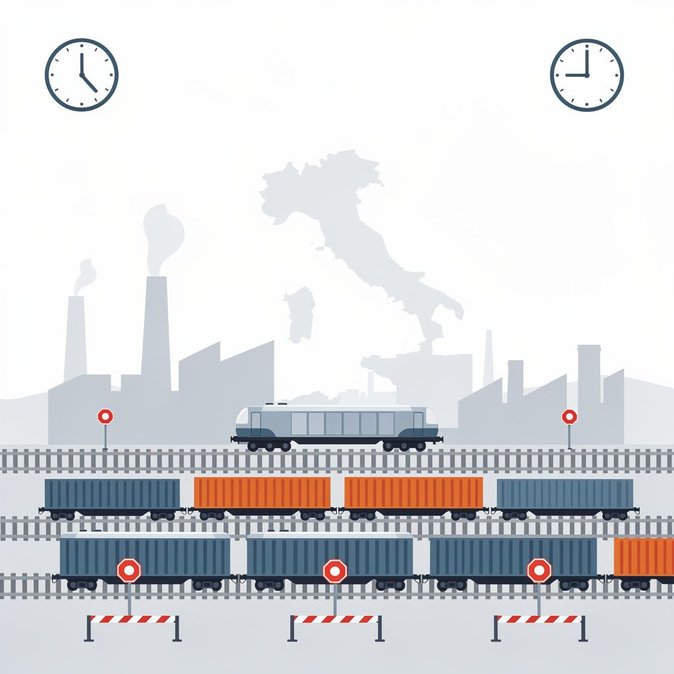
Italy’s logistics sector woke up to delays on Monday after an eight-hour strike by SBB Cargo Italia ran from 22:00 on 20 September to 05:59 on 21 September. The stoppage, called by the ORSA Ferrovie union, was classified as a nationwide action and affected most north-south freight corridors, including key intermodal hubs at Melzo, Verona Quadrante Europa and the Port of Genoa. While passenger services were largely spared thanks to statutory minimum-service rules, freight planners reported that some overnight container shuttles arrived up to six hours late, forcing trucking companies to reschedule first-mile deliveries. Car-maker assembly plants in Piedmont and Lombardy said they had sufficient buffer inventory but warned that repeated actions could jeopardise just-in-time operations. The strike stems from a dispute over roster patterns and fatigue management for locomotive crews operating cross-border services into Switzerland and Germany. Negotiations at the Ministry of Transport last week failed to produce an agreement, and unions have threatened further 24-hour actions in October if their demands are not met. For multinational companies, the incident highlights the vulnerability of Italy’s export-heavy economy to rail-freight disruption at a time when the Brenner motorway corridor is already congested by Austrian HGV quotas. Risk managers are advised to diversify routings via French and Slovenian crossings and to explore short-sea options from Adriatic ports as contingency.