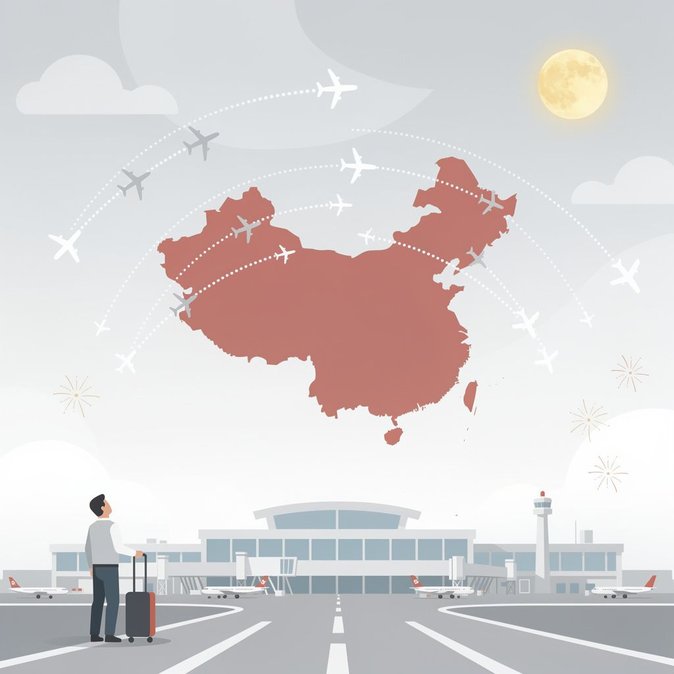
China’s peak travel season has arrived, and the Civil Aviation Administration of China (CAAC) says this year’s Mid-Autumn Festival/National Day “double-holiday” will push the country’s airline network to a new historic high. Speaking at a State Council press briefing on 24 September, CAAC officials told reporters that total scheduled and charter services have already reached 18,900 flights for the eve of the festival and will climb to 19,800 on 30 September, the predicted single-day peak. The regulator attributes the surge to the rare alignment of the two public holidays, a longer eight-day break, and the full restoration of China’s domestic capacity since the pandemic. International leisure demand is also rebounding sharply, with round-trip “loop” itineraries that combine multiple overseas points up 32 % year-on-year. In response, CAAC has instructed Chinese and foreign carriers to file additional frequencies on high-load routes and to extend night-time operating hours at major hubs such as Beijing-Capital, Shanghai-Pudong and Guangzhou-Baiyun. Operationally, the authority has activated its Level-II holiday contingency plan: air-traffic flow controls will be adjusted in real time, standby crews have been placed at 52 airports, and a fast-track slot-coordination cell will run 24×7 to approve emergency extra sections. Airports have been told to pre-position spare equipment and to open temporary security-screening lanes when queue times exceed 10 minutes. The regulator is also emphasising passenger experience, asking airlines to waive change fees during extreme-weather disruptions and encouraging mobile check-in to reduce terminal crowding. For corporate travel managers the message is clear: book early, build slack into connection times, and check for last-minute retiming of evening departures. Companies with expatriate staff returning to China should monitor seat availability closely; while capacity is abundant, prime time slots are filling up fast. The strong recovery is widely seen as a positive signal for China’s broader reopening and for multinational firms that rely on predictable domestic connections to feed international services.