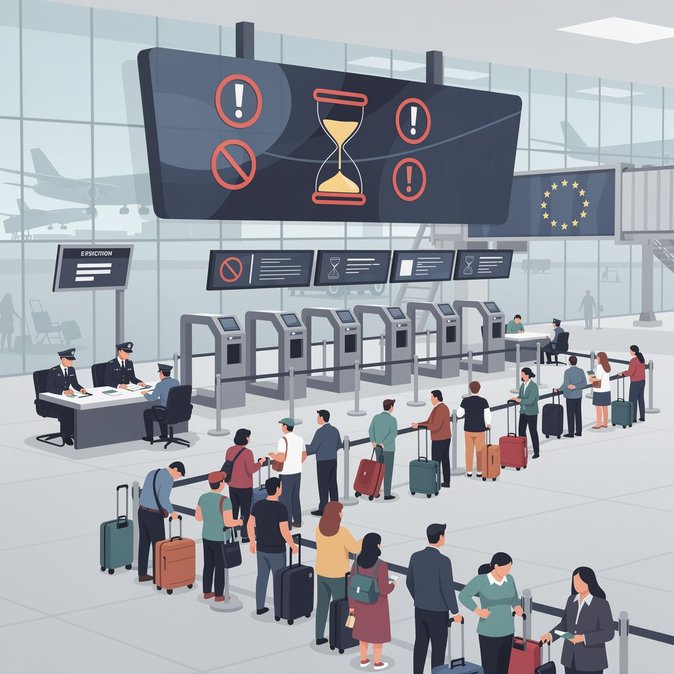
Passengers arriving at and departing from Frankfurt Airport faced unexpectedly long lines on 24 September after the automated Entry/Exit System (EES) that registers the biometric data of non-EU nationals malfunctioned for several hours. According to a spokesperson for the Federal Police, the new EU-wide database repeatedly froze during passport scanning in Terminal 1, forcing officers to revert to manual checks. Frankfurt operator Fraport asked travellers to allow extra time and to follow real-time updates on the airport’s website and social channels. By late afternoon the backlog had eased, yet the authority could not say when the system would return to full stability. The outage is the first major disruption at a German hub since the EES became mandatory in April 2026. Airlines flagged risks for tight connections because third-country passengers must complete the biometric capture step before reaching security or their gate. Travel-management companies advised corporates to pad itineraries and consider remote immigration clearance options where available. For aviation stakeholders, the incident is a stress test only five weeks before the autumn break, when leisure and business volumes spike. If similar outages occur at other German gateways, companies could face missed meetings, re-routing costs and duty-of-care issues. Experts say the Federal Police and IT-provider secunet will run a forensic review this weekend and may roll out a software patch across all 180 automated gates nationwide. Longer term, the episode underlines the importance of contingency planning as Germany pushes further digitalisation of border controls, including the full launch of the European Travel Information and Authorisation System (ETIAS) in mid-2027.
Source: Tagesschau