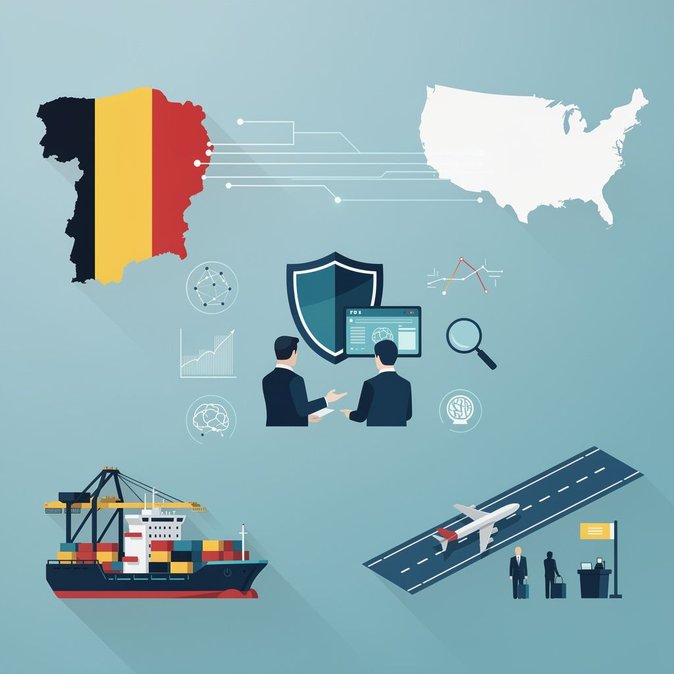
During a two-day visit to Washington, Belgian Interior Minister Bernard Quintin signed a roadmap with U.S. agencies—including the FBI and Homeland Security Investigations—aimed at bolstering information-sharing on organised crime and drug trafficking. The agreement, announced in the early hours of 25 September, focuses on ports, airports and digital evidence. Under the plan, FBI experts will train Belgian federal police in using artificial-intelligence tools to analyse passenger data and darknet communications. The Port of Antwerp, a major gateway for Latin American cocaine, will pilot new joint-intelligence cells staffed by Belgian and U.S. liaison officers. Similar cooperation already dismantled a terrorist cell in Antwerp last year, Quintin said. For global-mobility managers the headline is tighter screening. U.S. tips have previously triggered extra passport inspections at Brussels Airport; officials say the new framework could lead to more targeted secondary checks for travellers flagged by shared watch-lists. Freight forwarders moving high-value or sensitive cargo through Belgian ports should also expect additional customs queries. Business associations welcomed the move, arguing that curbing drug-related violence around Antwerp will improve Belgium’s attractiveness for expatriates. However, privacy advocates call for strict oversight of any AI-driven analytics to ensure compliance with EU data-protection rules. The Interior Ministry will brief parliament on the implementation timeline next month. Companies are advised to update travel-risk policies and remind employees passing through Belgian ports and airports to allow extra time for possible security interviews.
Source: Emirates News Agency