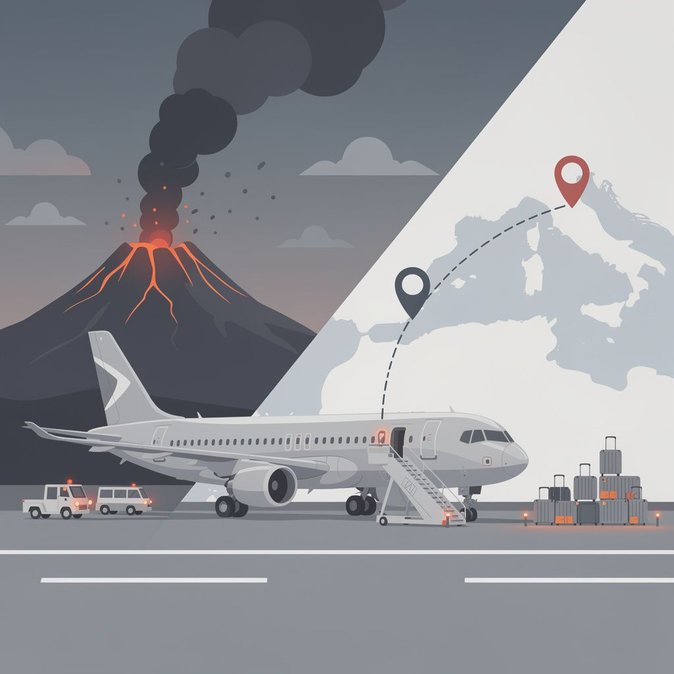
Sicily’s Mount Etna erupted again on Sunday, spewing a 4-kilometre-high ash plume that shut Catania–Fontanarossa Airport and reverberated all the way to the Gulf. Dubai-based carrier Flydubai cancelled both legs of its daily DXB-CTA rotation (FZ 1501/1502) on 27 September after the Italian airport operator suspended all traffic until at least 23:59 local time. While volcanic ash incidents frequently disrupt Mediterranean aviation, the cancellations carry extra weight for UAE-Italy trade. Catania is a key entry point for Sicilian agrifood exports and a leisure gateway that funnels thousands of Italian tourists—and seasonal workers—into the Emirates each year. Flydubai advised ticket-holders to rebook or seek refunds via its call centre or travel agents, waiving change fees for affected segments. Passengers connecting onward on Emirates codeshare itineraries were automatically protected on alternative routings where seats allowed, although some faced overnight hotel stays in Dubai. The episode serves as a reminder that natural-hazard clauses in corporate travel insurance often exclude volcanic ash, leaving companies to shoulder accommodation and productivity costs. Risk managers should verify coverage and consider bolt-on disruption policies for staff who routinely transit volcanic regions. Catania airport officials said a review of wind and seismic data would determine Monday’s operational status. Should ash fallout persist, carriers may divert to Palermo, Trapani or even Malta, adding at least three hours’ surface transfer time for travellers bound for eastern Sicily.
Source: Gulf News