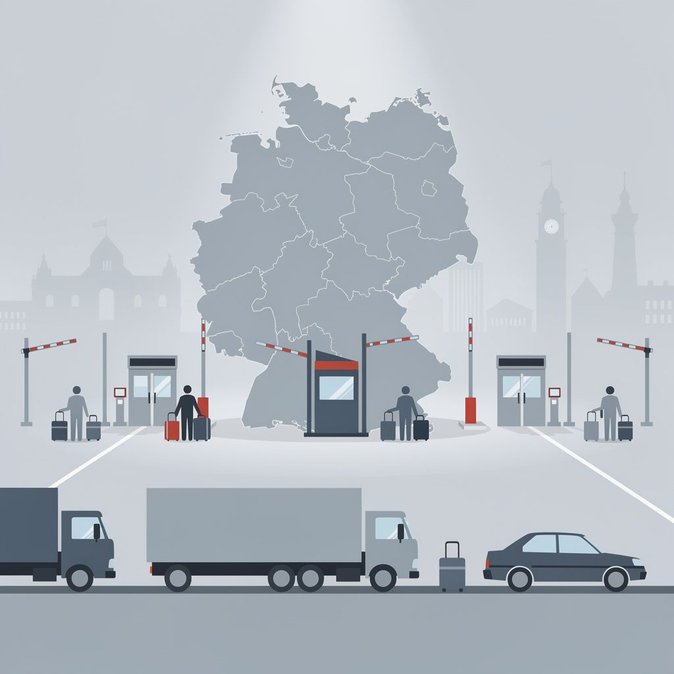
Fresh figures leaked from the Federal Interior Ministry show that Germany registered only 3 345 first-time asylum applications between 1 and 25 September—barely a third of the 9 126 recorded in the same month last year and the lowest September total since 2012. Interior Minister Dobrindt credited the drop to the “Migrationswende” launched earlier this year: the re-introduction of controls at all German land borders, fast-track procedures at the Polish and Czech frontiers, and tougher returns of rejected applicants. Policy analysts point to three additional drivers: EU-funded surveillance along the Balkan route, bilateral readmission deals with Georgia and Moldova that entered into force this summer, and the decline in Ukrainian arrivals as more refugees take up the EU-wide temporary-protection scheme instead of filing for asylum in Germany. Applications by Syrians and Afghans, by contrast, remain relatively stable, indicating that conflict-driven flight continues despite obstacles. For municipalities, the sharp decline eases pressure on housing and schooling, but city mayors warn that border checks are costing local business travellers extra time—especially lorry drivers who now face spot inspections even on intra-Schengen legs. Logistics firms report average delays of 20–40 minutes per crossing on the A17 (Czech border) and the A12 (Polish border), compelling them to adjust delivery schedules. Corporate mobility and global-assignment teams should watch whether the trend holds once winter sets in, when arrivals traditionally rise. Lower asylum numbers could free up processing capacity at immigration offices, potentially shortening waiting times for work-permit appointments—an upside for employers seeking to onboard non-EU talent. At the same time, the political narrative of “success” through stricter enforcement may embolden calls for additional security-driven visa rules in 2027, so stakeholder engagement remains essential.
Source: BR24 / n-tv