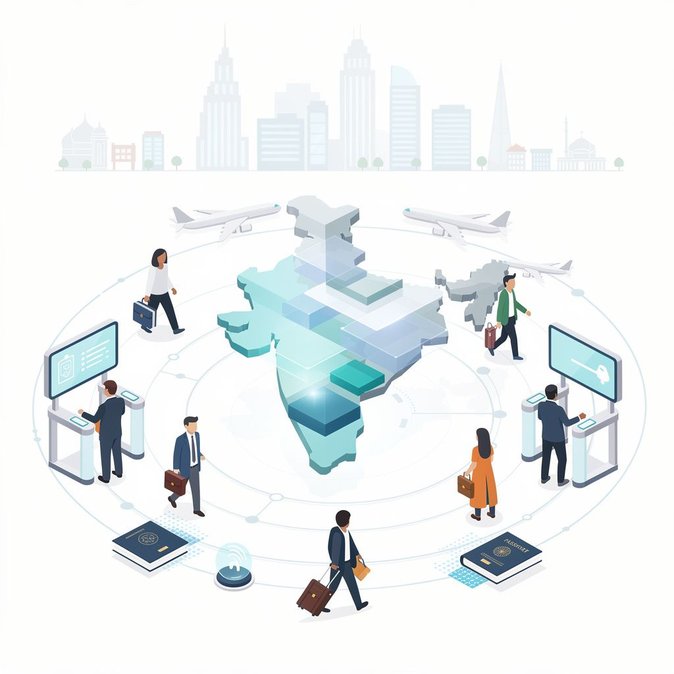
On the eve of World Tourism Day (27 September), India’s Ministry of Tourism rolled out an ambitious reform package designed to make international travel to and within India more seamless for business and leisure visitors alike. Speaking at the national celebrations in New Delhi on 26 September, Tourism Minister Gajendra Singh Shekhawat announced the launch of the National Digital Tourism Stack (NDTS) – an open, public-digital-infrastructure platform that will allow visas, itinerary planning, transport bookings and verified accommodation listings to be accessed through a single API layer. The stack is designed to plug directly into the Bureau of Immigration’s upgraded Immigration, Visa, Foreigners Registration & Tracking (IVFRT) system and India’s e-Visa gateway, which now covers 172 nationalities and processes 95 percent of applications inside 72 hours. Officials said NDTS will power real-time personalisation using artificial-intelligence tools developed under a June 2026 memorandum of understanding with Google India. For example, a German executive arriving on an e-Business visa could receive customised ground-transport offers, weather-based schedule adjustments and compliance reminders on the same dashboard. The ministry also confirmed that 11 additional airports, seaports and land ports have been added to the list of 88 authorised e-Visa entry points, widening access for cruise and land-border traffic. Beyond the technology layer, the government is pairing NDTS with new promotion and capacity-building schemes. “Dekho Apna Desh 2.0” will market 50 lesser-known destinations to spread visitor flows beyond the traditional metros, while a National Digital Tourism Stack certification will be created for start-ups that integrate with the platform. Investment incentives under the Swadesh Darshan 2.0 and PRASHAD programmes have been aligned to encourage private players to adopt the open-API standards. For corporates, the most immediate gain is a simpler compliance environment. A single sign-on will eventually allow global mobility managers to track employee travel history, visa validity and mandatory FRRO registrations in one place. Cruise operators and MICE organisers are expected to benefit from a new QR-based group-visa facility that cuts immigration clearance at seaports to under 30 seconds per passenger. The Bureau of Immigration said it aims to migrate all Fast-Track Immigration e-gates to the NDTS backbone by mid-2027. Indian authorities view the reforms as critical to achieving the target of USD 100 billion in inbound tourism receipts by 2030. With travel demand rebounding—foreign tourist arrivals hit 2.53 million in 2025—the digital stack could boost confidence among multinational firms routing regional conferences and project teams through India, while giving smaller airports and tier-2 cities a chance to plug into global supply chains.