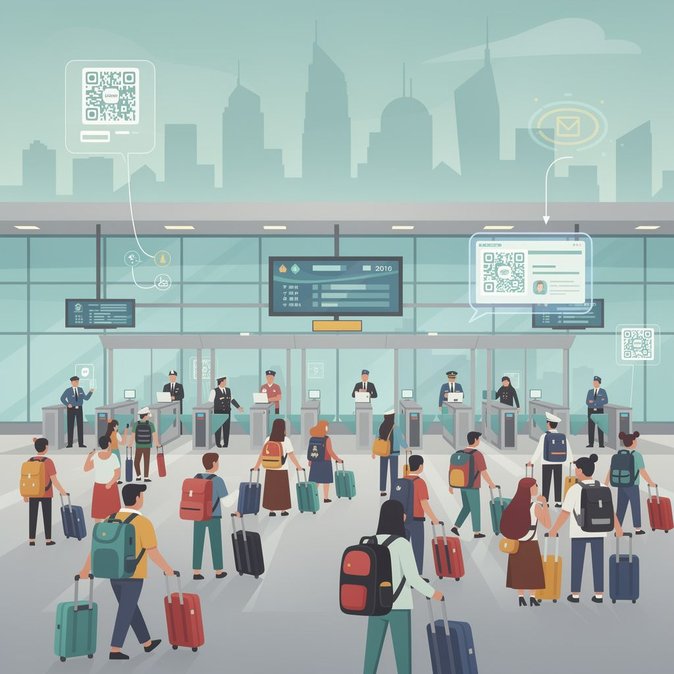
Hong Kong’s Immigration Department (ImmD) has issued its annual National Day forecast, projecting that 7.44 million passenger movements will pass through the city’s sea, land and air control points between 1 and 7 October. Of these, 6.31 million—85 percent—are expected to use the mainland land border, underlining the special administrative region’s role as China’s prime leisure and shopping outlet during the holiday. Peak outbound day is tipped to be 3 October, when up to 587 000 people could leave the SAR, while inbound volumes may climax a day later at 586 000. Lo Wu, Lok Ma Chau Spur Line and Shenzhen Bay crossings are flagged as pressure points, with average daily loads of 220 000, 190 000 and 150 000 travellers respectively. To cope, ImmD will cancel discretionary leave, open temporary booths and set up a joint command centre with Customs, Police and MTR Corporation inside Lo Wu station. A new feature this year is the “HK-EasyPass” web portal—part of the Security Bureau’s “i-Checkpoints” platform—which publishes live queue times and shuttle-bus headways for the Hong Kong–Zhuhai–Macao Bridge and Lok Ma Chau–Huanggang cross-border bus routes. Corporates can integrate the API into mobility apps to steer staff away from bottlenecks. The forecast has commercial implications beyond tourism. Retailers in Tsim Sha Tsui and Causeway Bay have extended opening hours to midnight and hired 3 000 temporary staff, banking on a mainland spending spree buoyed by a strong renminbi. Hotels report occupancy rates above 90 percent, and car-rental companies say all cross-border permits for “Hong Kong cars northbound” were snapped up within two hours of release. Travellers on business itineraries should pre-register for automated e-Channel clearance (now open to first-time visitors who hold an electronic passport and have entered Hong Kong at least once since 2024) and avoid the 10 a.m.–1 p.m. and 5 p.m.–8 p.m. slots identified by ImmD as red-zone periods.
Source: Hong Kong Government News