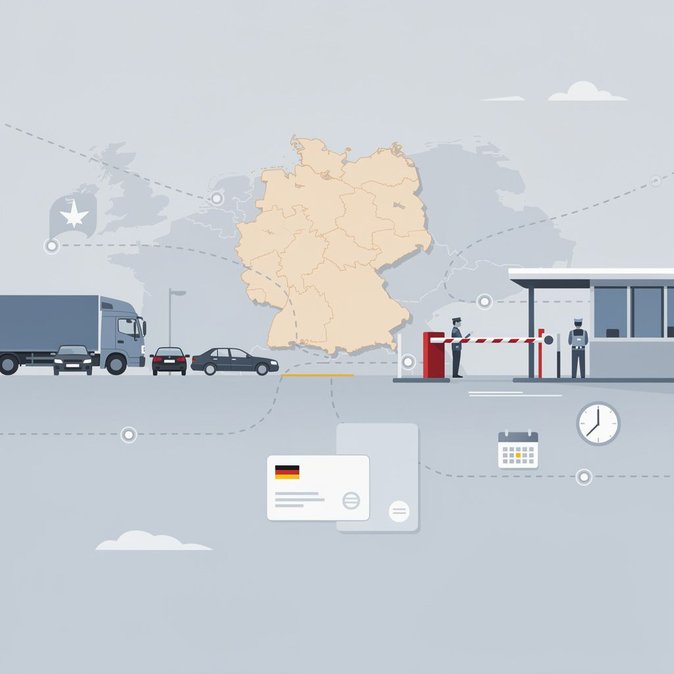
The European Commission’s Schengen dashboard, updated on September 29 2026, lists Germany among the Member States that have formally prolonged internal border controls for another six-month period, now running through 15 March 2027. Berlin justifies the measure with “continued serious threats to public security and order” stemming from high levels of irregular migration, people-smuggling networks and pressures on the asylum-reception system. Germany first re-introduced controls on its land frontier with Austria in 2015 at the height of the refugee crisis and has since made multiple extensions under Articles 25 and 27 of the Schengen Borders Code. The current notification widens the geographical scope to include spot checks on the borders with the Czech Republic and Poland, reflecting a recent uptick in clandestine crossings along the so-called Balkan and Eastern routes. Freight traffic and regular commuters are experiencing slightly longer wait times, although the Federal Police insists that checks remain risk-based and mobile. For businesses the extension has mixed implications. Logistics providers must factor in potential delays, especially for just-in-time deliveries from Central and Eastern Europe, while coach operators need to ensure passengers carry valid ID. On the upside, the government is expanding a ‘green-lane’ programme that allows pre-vetted trucks to use dedicated corridors. Legal analysts note that Germany is pushing the envelope of the maximum four-year cumulative limit foreseen in EU law, a point that has drawn criticism from Brussels and neighbouring states. Interior Minister Joachim Herrmann defended the decision, arguing that the Common European Asylum System reform has yet to translate into operational relief at the external borders. The Commission is expected to deliver an opinion on proportionality in October but seldom blocks extensions outright. Global-mobility professionals should alert travelling staff—particularly third-country nationals with residence permits in other EU states—that they may be asked for proof of legal stay when crossing by road or rail. Carrying a passport and residence card, rather than relying on national ID alone, is strongly recommended until at least mid-March.