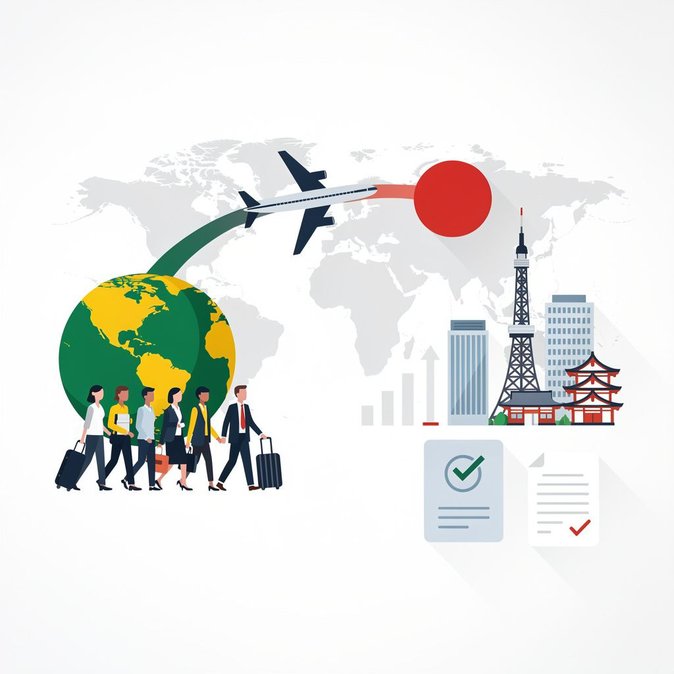
Japanese tourism authorities may be courting record global numbers, but the spike is especially pronounced in Brazil’s lucrative incentive-travel niche. According to Quickly Travel—Brazilian partner of Japan Travel Bureau—demand for corporate incentive programs to Japan has soared 75 % compared with 2025, propelled by Tokyo’s decision to extend its reciprocal 90-day visa waiver for ordinary-passport holders until 29 September 2029. Historically, long haul and tight agendas made Asia a hard sell for MICE planners: a 24-hour journey ate into three-to-five-night itineraries. The waiver removes a major pain-point—paperwork—allowing travel managers to pitch richer, longer programs without the uncertainty of consular lead times. In 2025 Quickly Travel moved 42 executives from Nissin and 400 dealers from Toyota & TASA; for 2027 it already has a 120-person incentive confirmed for Cogna education group and is bidding on two more multi-million-real projects. The practical impact extends beyond Tokyo’s neon lights. Visa-free entry lets organisers split groups across Osaka’s food scene, Kyoto’s cultural heritage and Hokkaido’s skiing without return-to-consulate detours. Procurement teams also avoid courier costs, last-minute passport releases and the risk of denial that can sink an entire campaign’s ROI. For Brazilian exporters and tech firms chasing the Japanese market, the policy doubles as a soft-power play: executives can combine incentives with plant visits or trade shows like CEATEC without visa constraints. Conversely, Japanese vendors eyeing Brazil can enter under the same waiver—useful with São Paulo hosting the 2027 WTTC Global Summit. Travel-risk advisers still flag language barriers and jet lag, but the business case is shifting. As Paula Tanaka, Head of MICE Sales at Quickly Travel, notes, “When the paperwork disappears, the conversation changes from ‘it’s too far’ to ‘what extraordinary experience can we design?’” Expect more caipirinhas traded for saké in the boardroom incentive calendar.
Source: Brasilturis