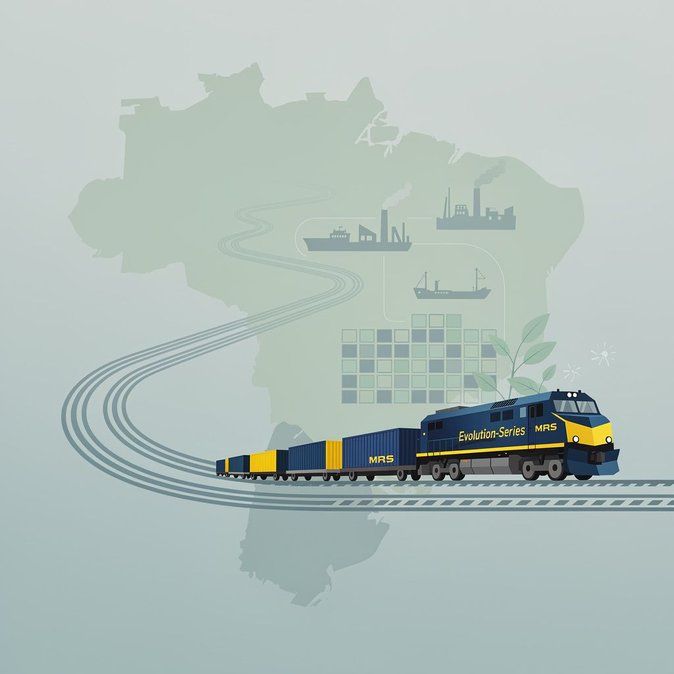
Brazilian freight-rail operator MRS Logística has inked a R$1.3 billion (US$250 million) agreement with Wabtec Corporation to acquire next-generation Evolution-Series locomotives, spare-parts packages and long-term maintenance support through 2032. Announced on 29 September 2026, the multi-year investment forms part of MRS’s concession-renewal commitments and its roadmap to decarbonise one of the country’s busiest rail corridors linking the states of São Paulo, Minas Gerais and Rio de Janeiro. While the order targets freight operations, the implications for corporate mobility are significant. The MRS network carries roughly one-third of all rail cargo in Brazil, including commodities that underpin export supply chains and inputs for automotive and heavy-industry clusters. Faster, more reliable rail movements reduce pressure on the federal highway grid and free up slots at congested airports for passenger growth—benefits that ripple through corporate relocation projects and time-critical supply chains. The new ES44ACi locomotives feature fuel-efficient prime movers, advanced predictive-maintenance sensors and remote-monitoring platforms that can cut greenhouse-gas emissions by up to 10 % per tonne-kilometre compared with previous-generation engines. For multinationals tracking Scope 3 emissions, the upgrade provides a greener inland-transport option when routing imports and project cargo through the southeastern ports of Santos and Itaguaí. From a workforce-mobility standpoint, the investment signals long-term stability in the rail corridor serving Brazil’s industrial heartland. Companies relocating expatriate staff to factory sites along the route can expect fewer logistics bottlenecks and improved on-time delivery of capital equipment. MRS is also setting up a training-centre expansion in Juiz de Fora, which will create specialised engineering positions and could trigger demand for intra-company transferees under Brazil’s VITEM V work-visa category. Global-mobility managers should monitor MRS’s phased deployment schedule—first units enter service in Q2 2027—to anticipate any temporary line closures during infrastructure upgrades. Forwarders are already encouraging shippers to book capacity early for the 2027 soy harvest, when initial performance gains from the new locomotives are expected to materialise.