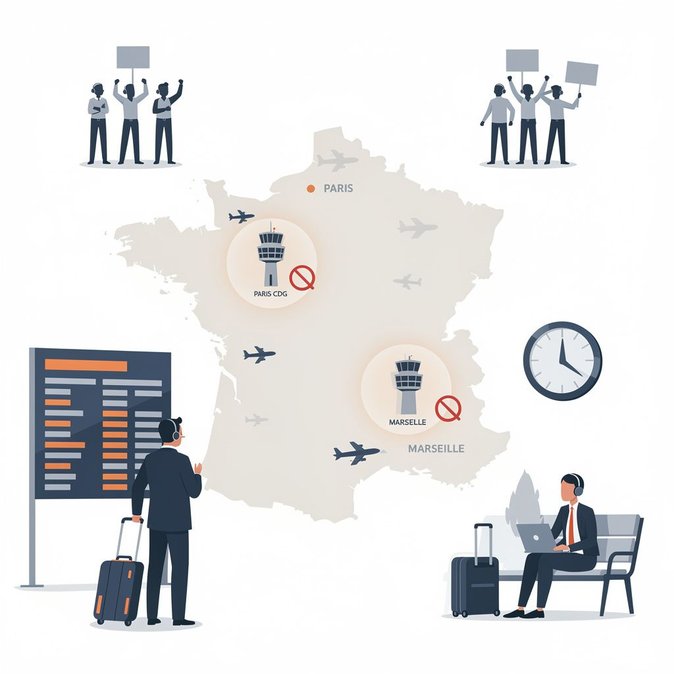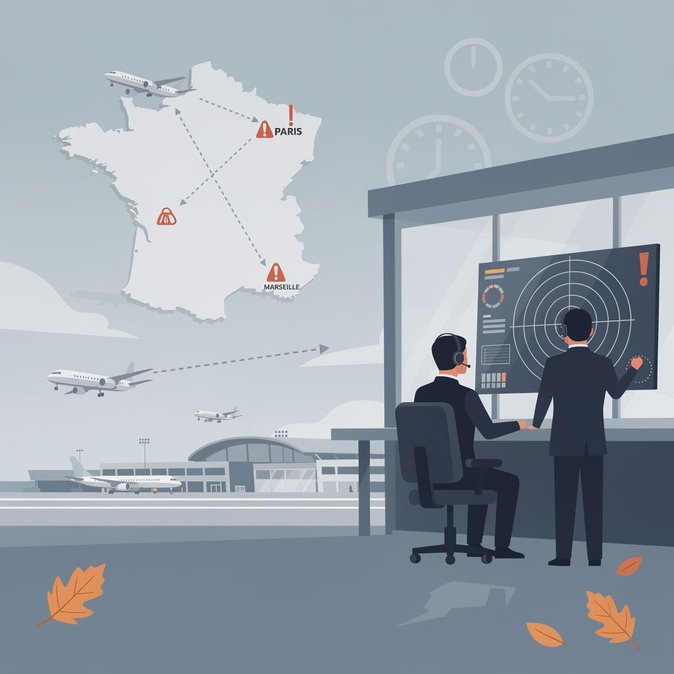
France’s one-day public-sector walkout on 29 September spilled onto the tarmac as air-traffic-control (ATC) staff joined teachers, hospital workers and firefighters demanding inflation-linked pay rises. The aviation regulator DGAC asked airlines to trim schedules by 5 % at Paris Charles-de-Gaulle between 07:00 and 20:00 and by up to 25 % at Marseille-Provence during the late-afternoon peak. Smaller hubs in Strasbourg, Nantes, Tarbes and Pau also warned of knock-on delays. While far less disruptive than dedicated ATC strikes seen earlier this year, the action still caused dozens of cancellations and forced carriers such as Air France and Ryanair to combine lightly booked services. Business travellers faced longer security queues as ground handlers operated with skeleton teams protected by minimum-service laws. Eurocontrol reported that over-flights were largely unaffected thanks to a legally mandated roster system introduced in 2023. Unions have threatened further co-ordinated protests if the 2027 budget fails to lift the public-sector wage index; DGAC therefore urged airlines to build extra slack into winter timetables. Travel managers moving staff to France should book flexible fares and monitor NOTAMs because even small cutbacks at CDG can ripple through trans-Atlantic connections. The episode also served as a live test of France’s contingency procedures for the 2027 Rugby World Cup, when organisers expect record inbound traffic. DGAC officials said they would refine strike-mitigation planning based on Wednesday’s performance, including the deployment of standby controllers drawn from regional centres.
Source: The Connexion