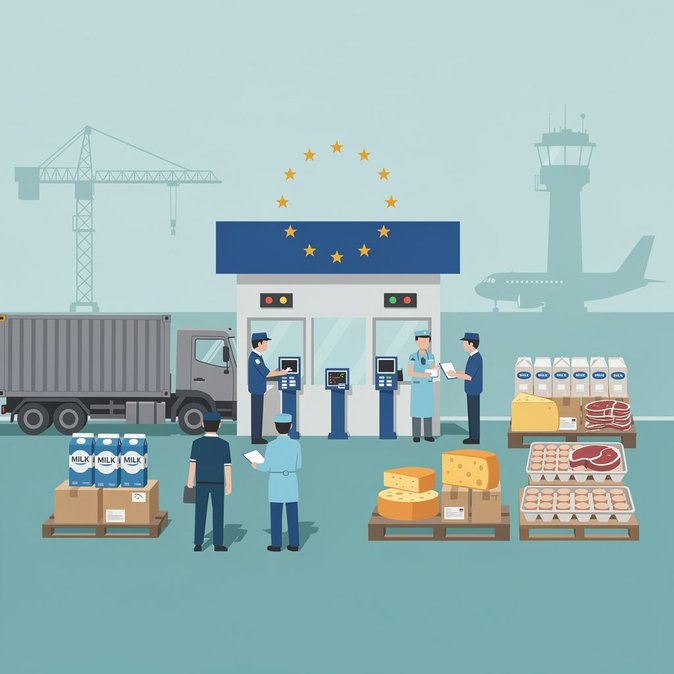
European Commission Implementing Regulation 2026/551, which expands the list of animal-origin and composite products subject to official controls, became applicable today, 1 October 2026, after a six-month transition period. The rules require consignments ranging from collagen peptides to insect-based pet food to be pre-notified in TRACES and inspected at designated Border Control Posts (BCPs). Belgium’s Federal Agency for the Safety of the Food Chain (FAVV/AFSCA) confirmed that BCPs in Zeebrugge, Antwerp and Brussels Airport are “fully operational” and have hired 35 additional veterinarians and phytosanitary inspectors. Importers failing to lodge a Common Health Entry Document (CHED-P) risk shipment holds of up to 72 hours and administrative fines of €1,500 per lot. Logistics providers report moderate congestion this morning at the Port of Antwerp’s Europa Terminal, where the first CHED-P inspections under the new code added an average 25 minutes per container. Brussels Airport Cargo said it had cleared 78 animal-product consignments by 10 a.m., with no major delays, thanks to extended weekend drills. The regulation aims to close loopholes exposed during the 2025 avian-influenza surge, when contaminated pet chews entered the EU via secondary airports. By adding 11 Combined-Nomenclature codes—including certain collagen, enzymes and medical gelatine—the EU hopes to standardise controls across Member States. For multinationals shipping pharmaceuticals, nutraceuticals or lab reagents through Belgium, the change means updating tariff classifications, ensuring suppliers obtain veterinary certificates and budgeting for higher inspection fees (currently €55 per CHED-P in Belgium). Mobility teams overseeing corporate relocations that involve household pets should also note the stricter scrutiny of pet food in accompanied baggage.